
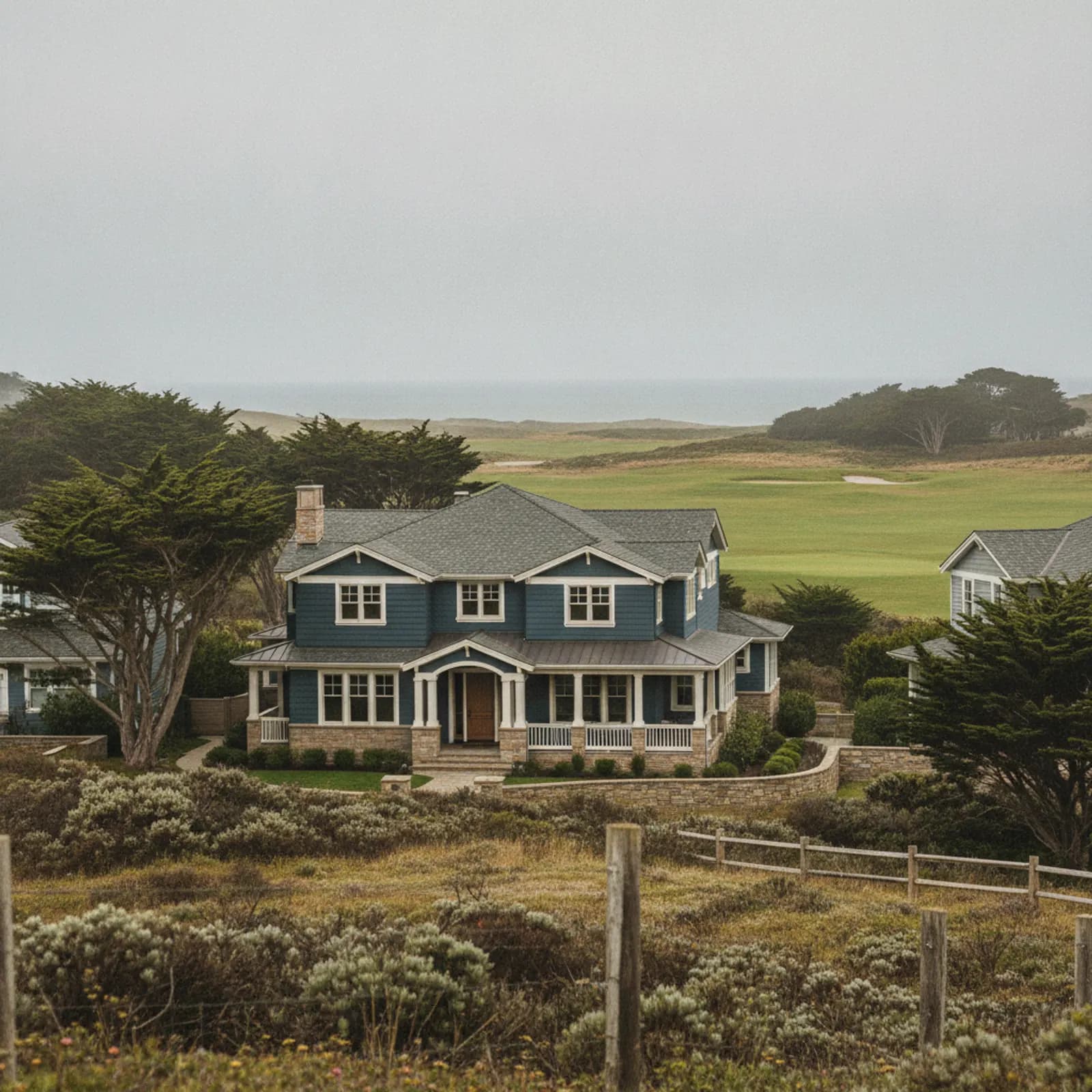
Exterior Renovation Built for Pebble Beach's Coastline
Few addresses in California push an exterior as hard as Pebble Beach. Homes inside the Del Monte Forest gate sit between the Pacific and a dense Monterey pine and cypress canopy, so cladding endures direct salt spray, near-daily marine fog, and the constant drip and shade that keep north walls damp. Sierra Siding approaches these estates the way the architecture deserves: as integrated weather-resistive assemblies, not just a new skin. We treat the 17-Mile Drive corridor, the Spyglass and Poppy Hills neighborhoods, and the forested interior streets as distinct microclimates, each calling for its own drainage, fastening, and finish strategy.
Why the Forest's Shaded Walls Fail First
The wall that fails first in Pebble Beach is rarely the oceanfront one — it's the north-facing forest elevation that never gets to dry. Del Monte Forest's dense canopy and persistent fog drip keep shaded walls wet long after the rest of the Peninsula has dried, and that lingering damp swells unprotected wood and feeds mildew even where direct salt spray is lighter. So a re-side here is two problems on one house: corrosion-grade detailing on the seaward bluffs and aggressive drying capability in the forest interior. We answer it with back-ventilated cladding, generous flashing, and hot-dip or stainless fastening, then often upgrade the drainage and ventilation on the shaded walls specifically. Dimensionally stable fiber cement holds its finish through years of that wet-shade cycle the way exposed wood cannot.
Considering an exterior project in Pebble Beach?
Estate Architecture in the Del Monte Forest
Pebble Beach is a portfolio of high-value styles rather than a single tract era. You find Mediterranean and Spanish Colonial revival villas with stucco and heavy trim, shingle-clad coastal traditionals reminiscent of the early forest cottages, and architect-designed contemporaries lining the fairways and bluffs. Each style asks for a different re-side approach: matching reveal and shadow lines on a traditional, preserving the massing and trim proportions on a revival villa, and honoring crisp modern detailing on a contemporary. We document existing trim profiles and corner conditions before demolition so the rebuilt exterior reads as original, not retrofitted, on these closely watched properties.
Salt Spray and Forest Fog Are the Controlling Stressors
The controlling stressor here is relentless marine exposure. Pebble Beach homes get airborne chloride off the Pacific plus the Del Monte Forest's persistent fog and canopy shade, which keep walls wet long after the rest of the Peninsula dries. That combination corrodes standard fasteners, swells unprotected wood, and feeds mildew on shaded elevations. Our spec answers it directly: a continuous drainage plane, generous flashing at every penetration, hot-dip galvanized or stainless fastening, back-ventilated cladding where the assembly allows, and finishes rated for coastal UV and salt. The goal is an exterior that sheds water and dries fast even on the forest's dampest north faces.
Why Fiber Cement Leads on These Estates
For Pebble Beach we lead with James Hardie and other fiber cement systems because they are dimensionally stable in fog and salt, hold premium paint finishes, and will not swell, rot, or feed mold the way exposed wood does at this proximity to the surf. Where a forested traditional calls for the texture of wood, engineered wood lap or shingle gives that look with far better moisture behavior than solid cedar. We pair the cladding with corrosion-resistant fastening and meticulous flashing, then finish in factory-grade coatings so the estate keeps its appearance through years of marine weathering with minimal upkeep.
What Drives a Re-Side's Cost in Pebble Beach
Cost on these projects is driven less by square footage and more by complexity and access. Estate elevations are tall, articulated, and often wrap multiple wings, so staging, scaffolding, and detailed trim work add real labor. Gated access through the forest, careful protection of mature landscaping, and the high finish standard expected at this address all factor in. Coastal detailing itself, the upgraded fastening, flashing, and drainage plane that the salt environment requires, is non-negotiable here. We scope every estate individually and explain where the budget goes so the investment maps to the longevity these homes need.
Neighborhoods Across the Forest
Pebble Beach is not one condition but several. Homes along the 17-Mile Drive bluffs take the harshest direct spray and wind; properties around Spyglass Hill, Poppy Hills, and the Lodge sit deeper in the forest with heavier shade and fog drip; interior streets see less salt but more canopy moisture. We walk each elevation before we spec, because a north-facing forest wall and a west-facing oceanfront wall on the same house often need different drainage and finish answers.
Working Within a Gated, Standards-Driven Community
Del Monte Forest is a managed, gated community with design oversight and tree-protection expectations, so exterior work here runs to a higher procedural bar. We plan access and material staging around the gate, protect specimen pines and cypress, and keep the jobsite tidy and low-impact for neighbors. Respecting those community standards is part of doing the work correctly, and it keeps the project moving without friction at one of the most exacting addresses on the coast.
Protecting Estate Value
At this market level, the exterior is a major component of value and a constant signal of how the home has been maintained. A correctly executed re-side in fiber cement protects the structure from salt and fog for the long term while presenting the crisp, well-detailed appearance buyers and appraisers expect in Pebble Beach. Doing it right once is far cheaper than chasing rot, corrosion, and finish failure that an under-specified coastal job invites.
Pebble Beach is unincorporated: county permits, Cal-Am Water, and Pebble Beach CSD
A distinctive local detail worth naming: Pebble Beach is not a city. It is an unincorporated community — a Census-Designated Place — within Monterey County, so building permits, planning review, and code enforcement all run through the Monterey County Housing and Community Development Department in Salinas, not a city hall. Overlaid on the county process is the Del Monte Forest Land Use Plan and the Pebble Beach Community Services District (CSD), which handles sewer, garbage, and various community services and enforces architectural and tree-protection standards within the forest. Coastal parcels additionally fall under California Coastal Commission oversight for scope that alters the building envelope or triggers a coastal-development permit. Electric and gas are PG&E. Water is supplied by California American Water (Cal-Am), the same private utility serving the rest of the Peninsula under the Carmel River regulatory framework. Fire response is Cal Fire's Monterey unit through a service agreement with the Pebble Beach CSD. We flag county, CSD, coastal, utility, and fire items at the estimate stage rather than at the wall.
HZ10 and Pebble Beach's low-fire, high-salt reality
Pebble Beach is in James Hardie's HZ10 climate zone despite the fog and salt — HZ10 covers the West's mild coastal areas — and HZ10 is the correct spec for a Pebble Beach home; installing HZ5 is a documented warranty misapplication. On the fire side, the Del Monte Forest coastal parcels sit outside high-hazard FHSZ territory under California's 2025 LRA Fire Hazard Severity Zone map — the salt, fog, and forest-shade moisture spec is the entire game there. The inland forest fringes and the ridges climbing east toward Carmel Valley and Cachagua carry Moderate designations where the Monterey pine and coastal chaparral cure to fuel in offshore-wind conditions. On any parcels near those transitions the 2025 California Wildland-Urban Interface Code may apply. The code frame changed on January 1, 2026, when Chapter 7A was deleted from the Building Code and moved into the standalone WUI Code. On a Pebble Beach re-side the corrosion, moisture, and design-oversight work carries most of the spec.
Our process in Pebble Beach
- Step 1
Consultation
We listen to your goals and assess your home on site — exposure, substrate, and architecture.
- Step 2
Design & Proposal
A clear written proposal with the right system specified for your climate and a transparent scope.
- Step 3
Expert Installation
Trained crews install to manufacturer best practices with careful weather-management detailing.
- Step 4
Walkthrough & Support
A final walkthrough, full cleanup, and a clear written record of the scope completed — work we stand behind.
Pebble Beach exteriors only perform when the assembly is built for direct salt, fog, and forest shade, with the finish quality the address demands. Sierra Siding brings the coastal detailing and estate-grade craftsmanship these homes require. When you are ready, we will walk your property elevation by elevation and lay out exactly how we would protect it.
FAQ
Pebble Beach — Common Questions
Homes here sit in direct Pacific salt spray plus persistent Del Monte Forest fog and shade. That combination corrodes ordinary fasteners and keeps walls damp, so the cladding, flashing, and fastening all have to be specified for an aggressive coastal-marine environment rather than a dry inland one.
Yes. Fiber cement and James Hardie systems stay dimensionally stable in salt and fog, resist rot and mold, and hold premium finishes far better than exposed wood at this proximity to the surf. For homes wanting a wood look, engineered wood is the more moisture-stable alternative.
We document existing trim profiles, reveals, and corner details before demolition so the rebuilt exterior reads as original. Whether your home is a revival villa, a shingle traditional, or a contemporary, we rebuild to its proportions, not a generic profile.
Yes. We plan staging and access around the gate, protect specimen pines and cypress, and keep the jobsite low-impact for neighbors, working within the community's design and tree-protection expectations.
When the drainage plane, corrosion-resistant fastening, and flashing are detailed correctly for this environment, a fiber cement exterior is built to weather years of salt and fog with minimal upkeep. Most failures we see come from under-specified assemblies, not the material itself.
Estate elevations are tall and articulated, access runs through a gate, mature landscaping needs protection, and the finish standard is high. Those factors, plus mandatory coastal detailing, make scope and access the main cost drivers rather than raw square footage.
They do. Shaded north and forest-facing walls hold fog moisture longest and are most prone to mildew, so we often upgrade their drainage, ventilation, and finish even when oceanfront walls on the same house take more direct salt.
Explore
Exterior Services
Helpful Exterior Guides