Fire-Resistant Siding in Lake of the Pines
Fire-resistant siding is a real, central service at Lake of the Pines. The community sits inside a closed pine wildland-urban interface in the southwestern Nevada County foothills, and that pine canopy crowding the homes makes wildfire exposure here genuinely high. Hardening the exterior is a primary decision, scoped to both the community's HOA architectural review and the specific way a conifer fire moves.
High exposure in a closed pine canopy
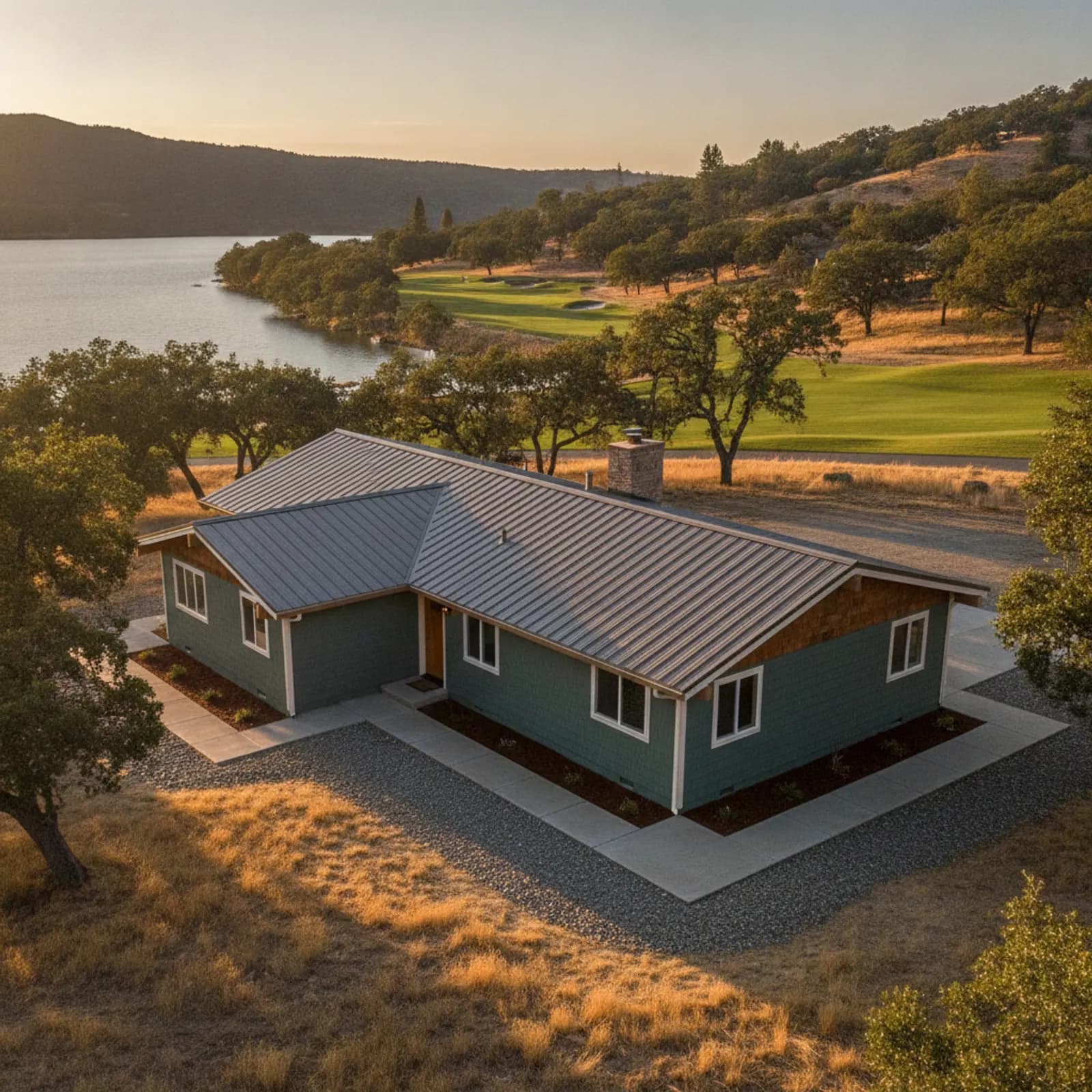
Unlike a valley-floor town, Lake of the Pines sits beneath a continuous conifer canopy that carries crown fire and showers embers across the community. We treat that as the controlling factor: Class A non-combustible cladding on the wall, plus hardened detailing at eaves, soffits, vents, decks, and the ground transition. The canopy means the threat is overhead and wind-borne, so the whole envelope, not just the wall face, has to refuse ignition.
Needle-cast and the ledges embers exploit
A pine WUI presents a specific failure pattern: burning needles and embers settle on every horizontal ledge and pile in every gap. Lake of the Pines homes accumulate needle duff on trim tops, behind shutters, in deck-to-wall seams, and on soffit returns. Fire-resistant siding here means designing those ledges out — clean ignition-resistant trim with no needle traps, fine-mesh ember-resistant vents, and sealed transitions where the canopy litter would otherwise wedge against the cladding and smolder.
Hardening the zero-to-five-foot zone under the trees
The first five feet around a Lake of the Pines home decides how a fire-resistant wall actually performs, because that band is where wind-driven embers settle against the foundation. The conifer setting makes this acute: needle duff and bark mulch pile against the base course year-round, and ember intrusion at the bottom of a wall undermines even a Class A assembly above it. We carry the non-combustible cladding all the way to grade with a clean, ignition-resistant termination instead of exposed wood trim, and we flag combustible material — wood deck stairs, fencing, mulch beds — that meets the wall plane. On these wooded lots the siding work and the immediate noncombustible perimeter are scoped together, so a hardened exterior is not quietly defeated by a five-foot band most owners overlook until an inspector or insurer flags it.
HOA review, insurance scrutiny, and documented hardening
Two pressures meet on a Lake of the Pines fire job. The HOA architectural review governs how the exterior may look, so we choose Class A profiles and colors that clear design review while delivering the hardening — approval and protection handled as one track. At the same time, carriers writing in pine-canopy foothill terrain have grown sharply more selective, and a re-clad is the moment to upgrade vents to ember-resistant assemblies and confirm the wall is non-combustible end to end rather than re-siding over hidden gaps. We keep written records of the materials and assemblies installed so a homeowner has something concrete to hand an insurer, while staying honest that documentation supports a policy conversation rather than guaranteeing any underwriting outcome.
Why this matters in Lake of the Pines
- Specified for Sierra Foothills conditions
- Class A non-combustible fiber cement as the recommended system
- Correctly detailed weather-resistive barrier and flashing
- Installed by a crew with 20 years combined experience
Recommended systems for Lake of the Pines
- Class A non-combustible fiber cement
- James Hardie
- fire-aware detailing
Fire-Resistant Siding for Lake of the Pines homes
The full fire-resistant siding approach — materials, weather-resistive detailing, and the manufacturer standards we install to — is covered on the main service page, then specified for Lake of the Pines's conditions on this one.
Our Lake of the Pines process
- Step 1
Consultation
We listen to your goals and assess your home on site — exposure, substrate, and architecture.
- Step 2
Design & Proposal
A clear written proposal with the right system specified for your climate and a transparent scope.
- Step 3
Expert Installation
Trained crews install to manufacturer best practices with careful weather-management detailing.
- Step 4
Walkthrough & Support
A final walkthrough, full cleanup, and a clear written record of the scope completed — work we stand behind.
FAQ
Fire-Resistant Siding in Lake of the Pines — FAQ
High. The community sits inside a closed pine wildland-urban interface where the canopy can carry crown fire and shower embers across homes. Non-combustible, hardened exteriors are the baseline here, not an upgrade.
Burning needles and embers settle on every ledge and pile in every gap. The wall has to be paired with ember-resistant vents, clean ignition-resistant trim with no needle traps, and sealed deck and soffit transitions, because the threat is overhead and wind-borne.
Yes. We select Class A profiles and colors that satisfy the community's architectural review and prepare the submittal, so the hardening and the approval move together.
It can support insurability in pine-WUI foothill terrain, and we document the materials and assemblies installed. Insurers set their own criteria, so we frame it as supporting a policy conversation rather than guaranteeing a result.
No. Under a pine canopy the eave, soffit, vent, deck, and ground-transition detailing complete the protection. We treat the exterior as one hardened system, including the five-foot zone at the base of the wall.
Keep Exploring
More for Lake of the Pines homeowners
More in Lake of the Pines
Other exterior services in Lake of the Pines
Nearby Service Areas
Fire-Resistant Siding near Lake of the Pines
Back to
Nevada County & Lake of the Pines
Helpful Exterior Guides