
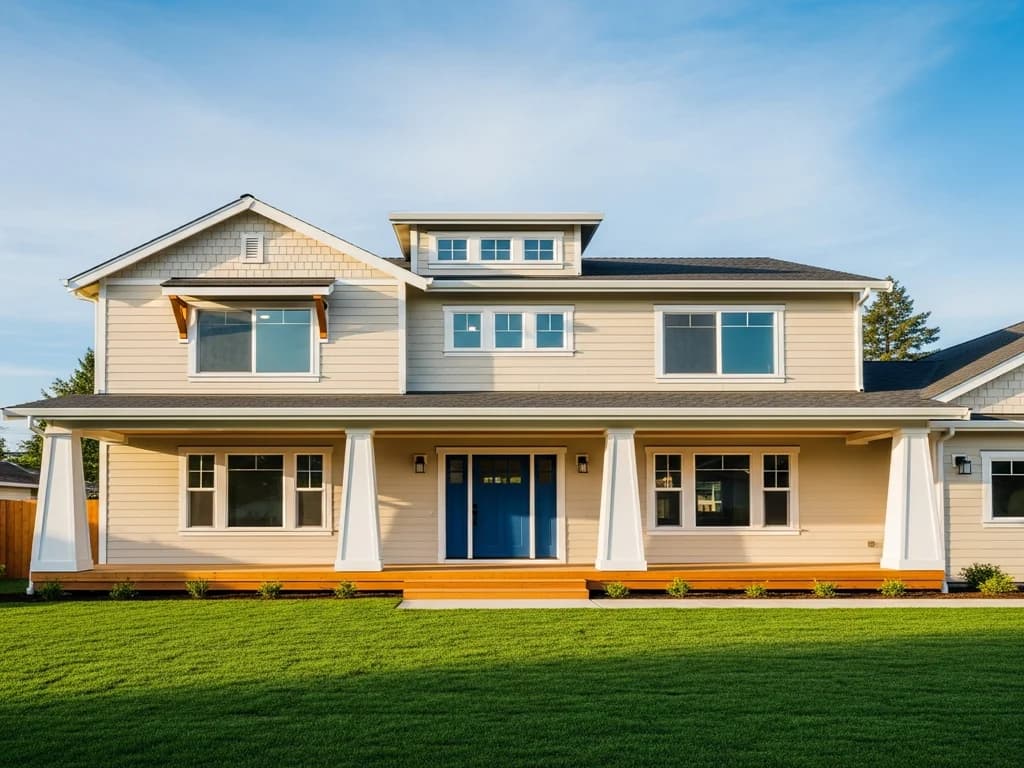
Dry Rot Repair in Alta
Most Alta houses went up in the 1970s through the 1990s, which means the wood at the bottom of their walls has been through about four decades of rain, snow and freezing nights at around 3,600 feet. On homes of that age, rot is less often a single soft board and more often a run of sill plate or rim joist hidden behind the lowest courses.
Alongside those are small cabins by the old rail line, manufactured and self-built houses on larger parcels, and a few recent customs among the pines. Each tends to rot in its own places. We find the decay, cut it out, repair the framing and close the water path. Our [dry rot repair](/dry-rot-repair) page has the general method.
Free estimate
Get your free Alta estimate
On-site assessment with a written, itemized scope. We reply within one business day.
Licensed, Bonded & Insured
Rim joist and sill rot on Alta's 1980s ridge houses
On a house this age, the lowest course of siding covers the rim joist and the sill plate, the framing that sits on the foundation. Snow piled against the wall, splash from the eaves and decades of small leaks drain down to that level and stay there. The siding may look tired but intact while the rim behind it has gone soft. We remove the bottom courses on any wall that shows staining or paint failure low down, probe the rim and sill along the run, and replace decayed lengths with treated lumber. The rebuilt base gets a gap above grade so snow and soil aren't touching the new cladding.
Rot on Alta's manufactured and self-built houses
Manufactured and self-built houses on Alta's larger parcels can have details a tract build wouldn't: trim nailed over siding with no flashing behind it, windows without a head flashing, or a wall-to-skirting joint where water can sit. We look at those specific joints, probe around every window and door, and check how the cladding is attached before cutting anything out, since some manufactured walls are built differently from site-framed ones. Replacement work follows what the wall is actually made of, and each finding is photographed for the written scope. Where the rot sits under a window, we check the rough opening and the floor framing below it before ordering parts.
Gable vents and trim on cabins by the old railroad line
The smaller, simpler cabins near the railroad alignment often have open eaves and gable vents, and the trim framing those vents takes wind-driven rain and snow. Rot shows up in the vent frame, the gable trim and the rake board ends. When we replace that wood, it's an easy time to fit an ember-resistant vent and block open eave gaps, because those are the fire weak points on these cabins. Our exterior trim rot article describes how water gets into joints like these. On a cabin this size, the gable end is often the only trim that gets wet from both rain and snow, so it is worth checking even when the walls below look fine.
Non-combustible material in Alta's Very High zone
At the community point CAL FIRE has mapped for Alta, the rating is Very High; individual lots are on the OSFM viewer. When rot means rebuilding the lower wall, we normally recommend non-combustible fiber cement for that band, in Hardie's HZ5 line for the 95701 ZIP. If rot turns up on several elevations of forty-year-old cladding, a re-side may cost less over time than continued repairs. For pricing factors, our guide for Truckee, farther up the corridor, covers rot repair in snow country. Where the rot is confined to one wall, repairing it and leaving sound cladding in place is still a fair choice.
Why this matters in Alta
- Specified for I-80 Corridor / Sierra Foothills conditions
- James Hardie fiber cement (HZ5 line) as the recommended system
- Correctly detailed weather-resistive barrier and flashing
- Installed by a crew with 20 years combined experience
Recommended systems for Alta
- James Hardie fiber cement (HZ5 line)
- non-combustible trim at the base of the wall
- ember-resistant vents and enclosed eaves
- factory-finished cladding for altitude UV
Dry Rot Repair for Alta homes
The full dry rot repair approach — materials, weather-resistive detailing, and the manufacturer standards we install to — is covered on the main service page, then specified for Alta's conditions on this one.
Our Alta process
- Step 1
Consultation
We listen to your goals and assess your home on site — exposure, substrate, and architecture.
- Step 2
Design & Proposal
A clear written proposal with the right system specified for your climate and a transparent scope.
- Step 3
Expert Installation
Trained crews install to manufacturer best practices with careful weather-management detailing.
- Step 4
Walkthrough & Support
A final walkthrough, full cleanup, and a clear written record of the scope completed — work we stand behind.
FAQ
Dry Rot Repair in Alta — FAQ
Yes, especially at the rim joist and sill hidden by the lowest boards. Stains or failing paint low on the wall are worth a probe.
Yes. We check how the walls and siding are attached first, since manufactured walls can be built differently from site-framed ones.
Yes, and it's a good time to do it. We can fit an ember-resistant vent while the trim is open.
Look for staining, bulges and repeated paint failure in one spot. Our signs of dry rot behind siding guide walks through them.
Keep Exploring
More for Alta homeowners
More in Alta
Other exterior services in Alta
Nearby Service Areas
Dry Rot Repair near Alta
Helpful Exterior Guides