Fire-Resistant Siding in Weimar
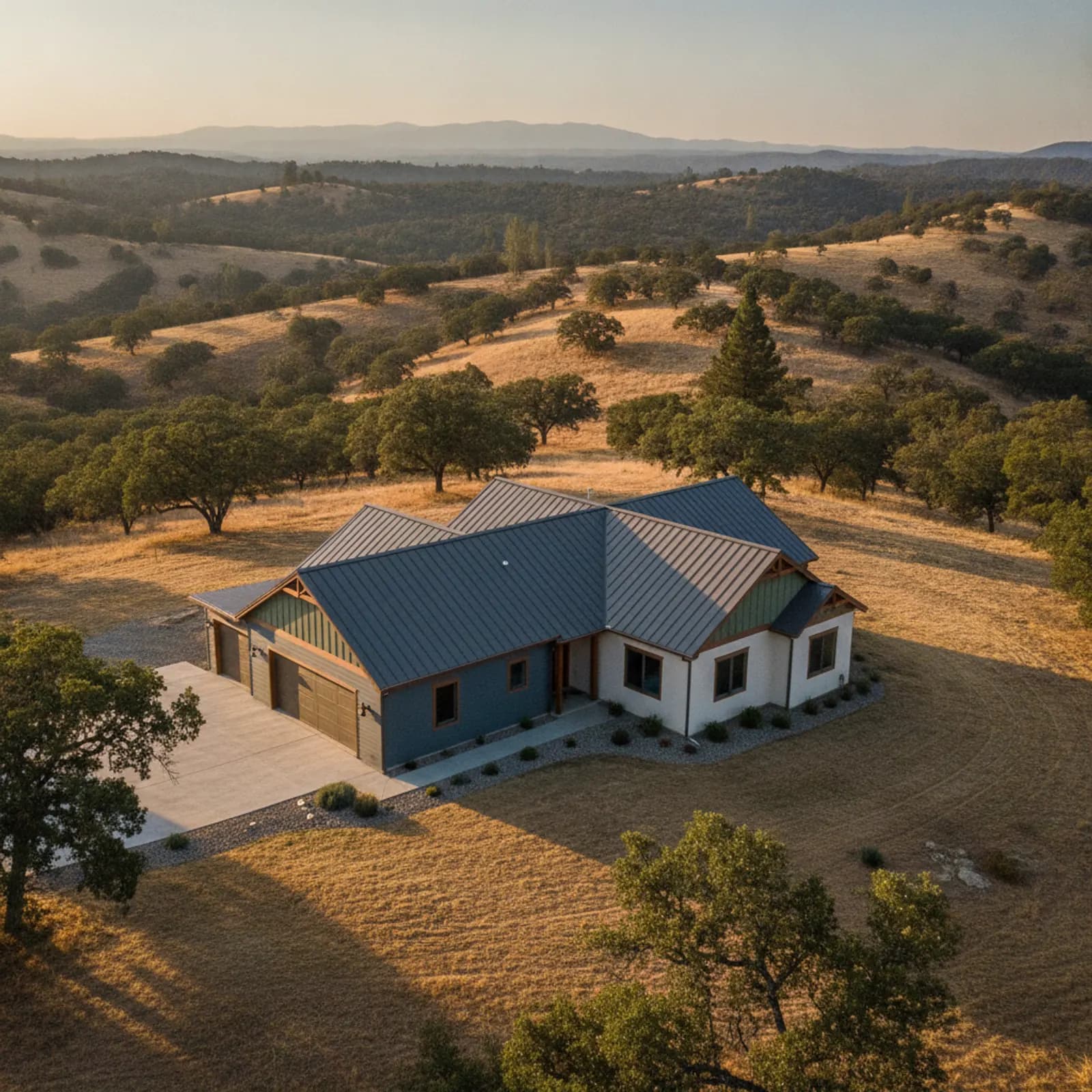
Weimar is deep Sierra fire country on a remote ridge, and the honest framing is that a home here is more likely than most to face fire with whatever protection it already has. That is the whole argument for hardening, and it is also the reason to be precise about what hardening does and does not do.
Cladding is the floor. What sits above it is the detailing, and above that is the ground.
Passive resilience carries more weight when help is further away
In a dense neighbourhood a structure's odds are shaped substantially by suppression arriving in time. On a ridge parcel with a long private drive and constrained access that assumption is weaker, so everything that works with nobody present carries proportionally more. Non-combustible cladding, ember-resistant vents, enclosed or non-combustible eaves and soffits, hardened ground transitions, and compliant decking are all measures that do not depend on anyone being there. That is the logic of the specification here rather than a general preference for the most robust option.
Upslope arrival and the elevation that matters
Fire moving up a hillside preheats and dries the fuel above it, so it accelerates and arrives at a ridge with more energy than the same fire on level ground — and it directs that energy at the downhill face and the underside of the structure rather than distributing it evenly. On a Weimar home that means the downslope elevation, the eaves above it, and any deck on that side are the governing details. It also means that vegetation management below the structure does more for its odds than most owners expect, and considerably more than an upgrade in cladding line would.
The measure with the best evidence is not construction
CAL FIRE reports that properties in compliance with defensible space requirements are five times more likely to survive a wildfire. On a wooded acreage parcel that is a substantial ongoing job — clearing the zone immediately around the structure, keeping it clear, managing fuel below on a slope. It is not work we sell, and on many Weimar properties it is the highest-value thing an owner can do. We will say so and scope a smaller construction project accordingly, because a hardened envelope sitting inside untended fuel has not achieved what the owner paid for.
What we will not tell you
We will not say that a hardened Weimar home is safe from wildfire, that hardening guarantees survival, or that a package makes a building fireproof. Homes built to a high standard have been lost and poorly built ones have survived, because outcomes depend on fire behaviour, weather, fuel loading, terrain, and available suppression far more than on any building decision — and on a remote ridge with slower response that is more true rather than less. Hardening improves the odds and removes the failure modes within your control. That is real, and it is not a promise.
Why this matters in Weimar
- Specified for Sierra Foothills conditions
- Class A non-combustible fiber cement as the recommended system
- Correctly detailed weather-resistive barrier and flashing
- Installed by a crew with 20 years combined experience
Recommended systems for Weimar
- Class A non-combustible fiber cement
- James Hardie fiber cement
- fire-hardened eave and vent detailing
- durable factory finishes
Fire-Resistant Siding for Weimar homes
The full fire-resistant siding approach — materials, weather-resistive detailing, and the manufacturer standards we install to — is covered on the main service page, then specified for Weimar's conditions on this one.
Our Weimar process
- Step 1
Consultation
We listen to your goals and assess your home on site — exposure, substrate, and architecture.
- Step 2
Design & Proposal
A clear written proposal with the right system specified for your climate and a transparent scope.
- Step 3
Expert Installation
Trained crews install to manufacturer best practices with careful weather-management detailing.
- Step 4
Walkthrough & Support
A final walkthrough, full cleanup, and a clear written record of the scope completed — work we stand behind.
FAQ
Fire-Resistant Siding in Weimar — FAQ
Because response times are longer and access can be constrained, so the building is more likely to face fire with whatever protection it already has. Everything that works with nobody present — cladding, vents, eaves, ground transitions, decking — carries proportionally more weight when active defence is less certain.
On a ridge, the downslope elevation, the eaves above it, and any deck on that side. Fire moving uphill preheats the fuel above it, accelerates, and arrives with more energy directed at the downhill face and the underside of the structure rather than distributed evenly.
Usually defensible space, which is not work we sell. CAL FIRE links compliance to a fivefold difference in survival odds, and on a wooded acreage parcel that is a substantial ongoing job including fuel management below on the slope. A hardened envelope inside untended fuel has not achieved what you paid for.
It improves the odds and removes the failure modes you control. It does not guarantee anything — well-built homes have been lost and poorly built ones survived, because fire behaviour, weather, fuel, terrain, and suppression matter more than any building decision. On a remote ridge with slower response that is more true, not less.
Keep Exploring
More for Weimar homeowners
More in Weimar
Other exterior services in Weimar
Nearby Service Areas
Fire-Resistant Siding near Weimar
Helpful Exterior Guides