
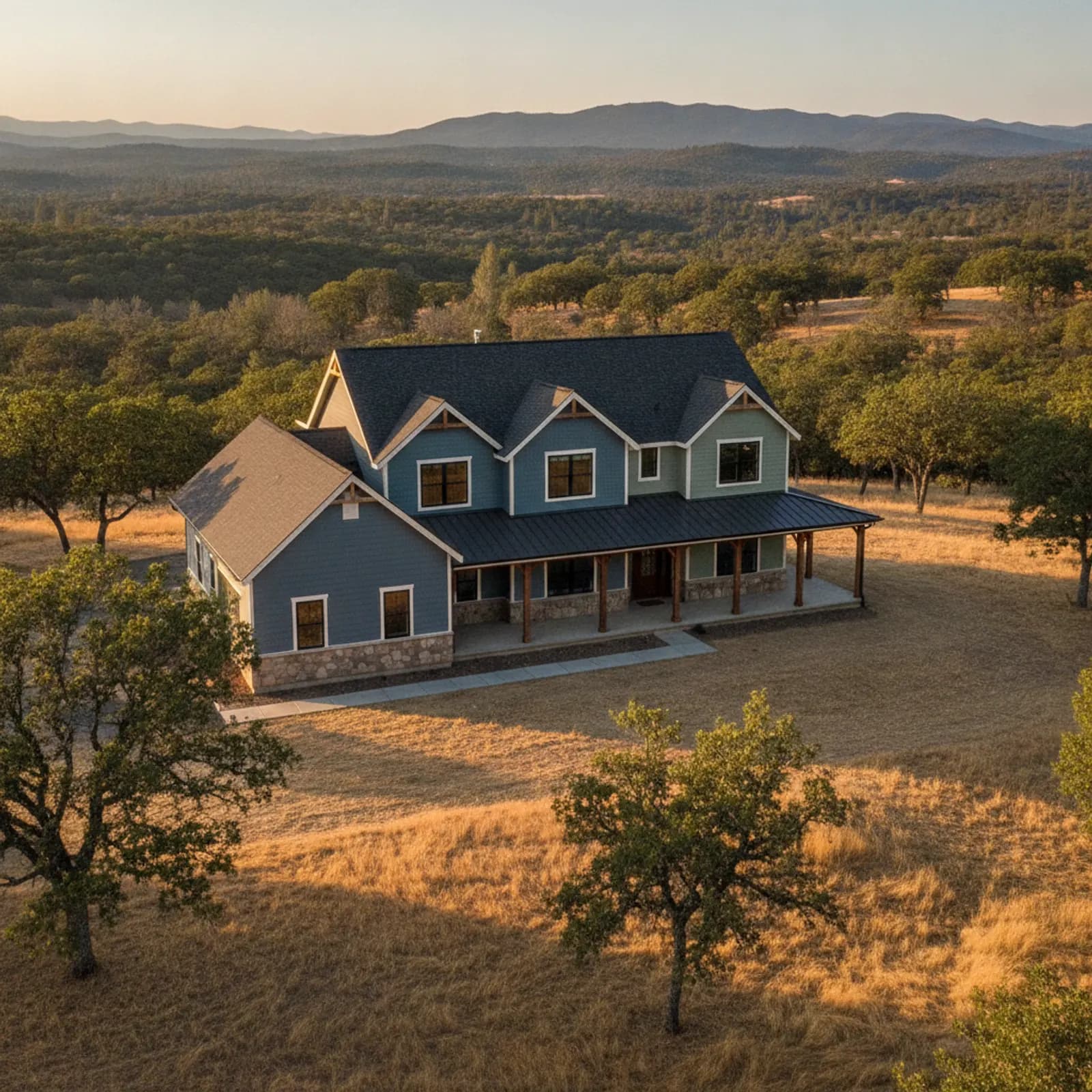
Window Replacement in Weimar
Windows on a Weimar ridge home face wind-driven weather, a genuinely cold winter at this elevation, and a high fire exposure on a parcel where help may be some distance away.
The glazing question here is not primarily about energy bills, though those matter — it is about a component that tends to fail first when radiant heat arrives.
Glazing as part of a passive defence
Glass typically fails under sustained radiant heat before the wall around it does, and a failed window is a direct opening for embers and flame into the interior. On a remote high-exposure ridge parcel, where the building is more likely to face fire with whatever protection it has, that matters more than it would closer in. Wildland-interface construction treats glazing as a hardening component for exactly this reason, generally favouring multi-pane and tempered assemblies. Whether a requirement applies to your parcel is Placer County's determination based on the fire hazard severity zone and the scope of work.
Wind-driven rain finds the opening first
A ridge position means weather arrives horizontally rather than vertically, and openings are where that shows up. Head flashing over every opening matters more here than it does in sheltered terrain, sealed penetrations matter, and a sill pan that drains rather than holds is not optional. On older ridge construction those details are frequently thin. A window that leaks in a driving storm but not in ordinary rain is usually telling you the head detail is inadequate rather than that the unit failed.
Both label numbers do work at this elevation
Weimar's elevation brings genuinely cold winter nights, which makes U-factor matter more than it does on the valley floor — it governs the heating side and the frame material carries real weight. Solar heat gain coefficient still governs the summer load on sun-facing elevations through patchy canopy. Unlike the valley, where solar gain dominates, both numbers are doing work here, and it is worth looking at the whole NFRC label rather than optimising for one figure.
Access, and doing it once
On a remote parcel with a long drive, mobilisation is a real share of the cost of any project, which changes the arithmetic on phasing. Doing windows and siding together shares that setup and lets the openings be flashed properly with the wall open — the only affordable moment to correct a sill pan. Where a homeowner would phase in town to spread cost, on a Weimar property the repeated mobilisation frequently cancels the benefit. It is worth pricing both ways rather than assuming phasing is cheaper.
Why this matters in Weimar
- Specified for Sierra Foothills conditions
- Class A non-combustible fiber cement as the recommended system
- Correctly detailed weather-resistive barrier and flashing
- Installed by a crew with 20 years combined experience
Recommended systems for Weimar
- Class A non-combustible fiber cement
- James Hardie fiber cement
- fire-hardened eave and vent detailing
- durable factory finishes
Window Replacement for Weimar homes
The full window replacement approach — materials, weather-resistive detailing, and the manufacturer standards we install to — is covered on the main service page, then specified for Weimar's conditions on this one.
Our Weimar process
- Step 1
Consultation
We listen to your goals and assess your home on site — exposure, substrate, and architecture.
- Step 2
Design & Proposal
A clear written proposal with the right system specified for your climate and a transparent scope.
- Step 3
Expert Installation
Trained crews install to manufacturer best practices with careful weather-management detailing.
- Step 4
Walkthrough & Support
A final walkthrough, full cleanup, and a clear written record of the scope completed — work we stand behind.
FAQ
Window Replacement in Weimar — FAQ
More than closer in. Glass typically fails under sustained radiant heat before the wall does, and a failed window is a direct opening for embers and flame — which matters most on a remote parcel where the building is likely to face fire with whatever protection it already has.
Usually an inadequate head detail. On a ridge, weather arrives horizontally rather than vertically, so head flashing over the opening and sealed penetrations matter far more than in sheltered terrain. A unit that performs in ordinary rain and fails in a storm is reporting the flashing, not the window.
Neither alone — both do work at this elevation. U-factor matters more than on the valley floor because winter nights are genuinely cold, and frame material carries real weight. Solar heat gain still governs summer load on sun-facing walls. Look at the whole label rather than one figure.
Price it both ways before assuming. On a remote parcel with a long drive, mobilisation is a real share of any project's cost, and repeated mobilisation frequently cancels the benefit of phasing. Doing windows and siding together also lets the openings be flashed properly with the wall open.
Keep Exploring
More for Weimar homeowners
More in Weimar
Other exterior services in Weimar
Nearby Service Areas
Window Replacement near Weimar
Helpful Exterior Guides