
Window Replacement in North Highlands
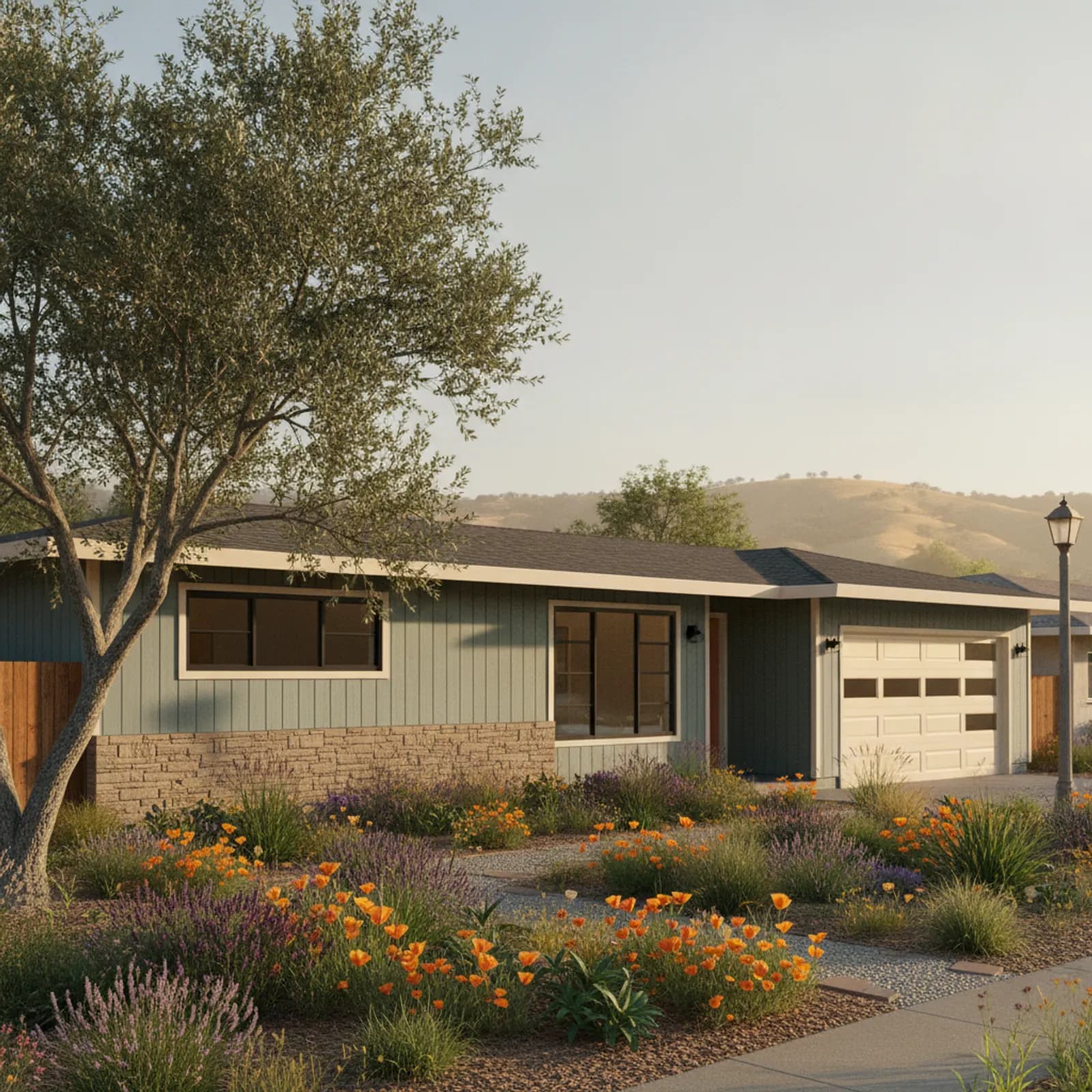
Window replacement in North Highlands is one of the more clearly justified exterior projects in the Sacramento region, because the housing stock and the climate line up so directly. These are 1950s and 1960s postwar tract homes, mostly built with single-pane glass in uninsulated frames, sitting on flat unshaded valley floor where summer afternoons run long and hot. The original windows are a straightforward thermal liability.
The gain is measurable in comfort before it is measurable on a bill: west-facing rooms that currently become unusable in August afternoons are the rooms owners notice first after a competent replacement.
Why the original windows are the weak point
Single-pane glass provides almost no resistance to heat transfer, and the metal frames common in this era conduct heat directly through the assembly regardless of what the glass is doing. In a climate where the cooling season is long and intense, that combination means the windows are admitting solar heat all afternoon and then continuing to conduct it after sunset. Owners of this stock recognize the symptoms without needing a diagnosis: west rooms that stay hot into the evening, air conditioning that never cycles off during a heat wave, and interior condensation in winter where warm indoor air meets cold single-pane glass.
The number that matters most in the valley
Solar heat gain coefficient is the figure to focus on for a North Highlands home. It describes the fraction of the sun's energy the window admits, and in a heat-dominated climate it does more for comfort and cooling cost than anything else on the label. U-factor — how readily heat moves through the whole assembly — matters as well, but it governs the winter side, which is the milder problem here. Both are printed on the NFRC label that every compliant window carries, which means competing bids can be compared on identical terms rather than on descriptions. California's energy code sets minimums for the climate zone, and the building department is the authority on what a specific project must meet.
Elevation-by-elevation is better than one-size
Most projects specify one product for the whole house, which is a reasonable simplification and keeps the cost down. It is not the optimum. On these small single-story homes, the west elevation takes a fundamentally different load from the north, and where the budget allows, tuning the specification to the elevation gets more out of the same spend — a more aggressive solar-control coating where the afternoon sun lands, a more balanced specification where it does not. It is worth at least discussing rather than defaulting, particularly on a home where one or two rooms are driving the whole decision.
The part that determines whether the wall stays dry
A window replacement is a water-management operation as much as a thermal one, and this is where projects on this housing stock go wrong. The opening needs a sill pan beneath the unit to catch and drain any water that gets past it, head flashing above lapped correctly against the wall's weather barrier, and jamb detailing that maintains the layering. On 1950s construction those details were often minimal or absent to begin with. A replacement that drops a better window into an unimproved opening has upgraded the thermal performance and left the water problem exactly where it was — which is why a window that starts leaking after replacement is almost always reporting a flashing error rather than a defective unit.
Why this matters in North Highlands
- Specified for Sacramento Valley conditions
- James Hardie as the recommended system
- Correctly detailed weather-resistive barrier and flashing
- Installed by a crew with 20 years combined experience
Recommended systems for North Highlands
- James Hardie
- fiber cement
- engineered wood
Window Replacement for North Highlands homes
The full window replacement approach — materials, weather-resistive detailing, and the manufacturer standards we install to — is covered on the main service page, then specified for North Highlands's conditions on this one.
Our North Highlands process
- Step 1
Consultation
We listen to your goals and assess your home on site — exposure, substrate, and architecture.
- Step 2
Design & Proposal
A clear written proposal with the right system specified for your climate and a transparent scope.
- Step 3
Expert Installation
Trained crews install to manufacturer best practices with careful weather-management detailing.
- Step 4
Walkthrough & Support
A final walkthrough, full cleanup, and a clear written record of the scope completed — work we stand behind.
FAQ
Window Replacement in North Highlands — FAQ
Solar heat gain coefficient. In a valley climate where summer heat is the dominant load, how much solar energy the window lets in does more for comfort and cooling cost than anything else on the label. U-factor matters, but it governs the winter side, which is the milder problem here.
They generally reduce cooling load, and on this housing stock the comfort change tends to be more noticeable than the bill change — west rooms that were unusable on August afternoons becoming usable. How much the bill moves depends on the rest of the envelope, particularly attic insulation, so we would rather not quote a savings figure we cannot stand behind.
It is worth discussing. Most projects use one product throughout, which is a reasonable simplification. But on these small single-story homes a west wall and a north wall take genuinely different loads, and tuning the specification by elevation gets more out of the same budget — especially when one or two hot rooms are what prompted the project.
Almost certainly the flashing at the opening rather than the window. On 1950s construction the sill pan and head flashing were often minimal or missing, and a replacement that installs a better unit into an unimproved opening leaves the water path exactly as it was. The fix is rebuilding the opening's flashing, not replacing the unit again.
Keep Exploring
More for North Highlands homeowners
More in North Highlands
Other exterior services in North Highlands
Nearby Service Areas
Window Replacement near North Highlands
Back to
Sacramento County & North Highlands
Helpful Exterior Guides