Exterior renovation in North Highlands
North Highlands is an established, unincorporated north-county community that grew up around McClellan Air Force Base, with much of its housing built in the 1950s and 1960s to house the base's workforce. That origin gives it one of the densest concentrations of postwar single-story tract and ranch homes in the Sacramento area — a large, fairly uniform stock that is now decades past the service life of its original siding. For homeowners here, the practical question is straightforward: durable, heat-stable cladding that protects an older modest home and visibly resets a tired postwar street, without the premium-market complications of the county's gated enclaves.
Why it matters here specifically
Heat and UV, not moisture or fire, is the controlling stressor in North Highlands. The economy hardboard, T1-11, and composite cladding on these postwar homes was never built for decades of valley sun, so it fails predictably — chalking, cupping, and faded paint, worst on the south and west walls. Because the base-era blocks went up in a compressed span, neighbors are often facing the identical end-of-life at once, which makes a thoughtful re-side both overdue protection and a visible reset on a repetitive street that has carried its original cladding far too long.
Considering an exterior project in North Highlands?
North Highlands housing and architecture
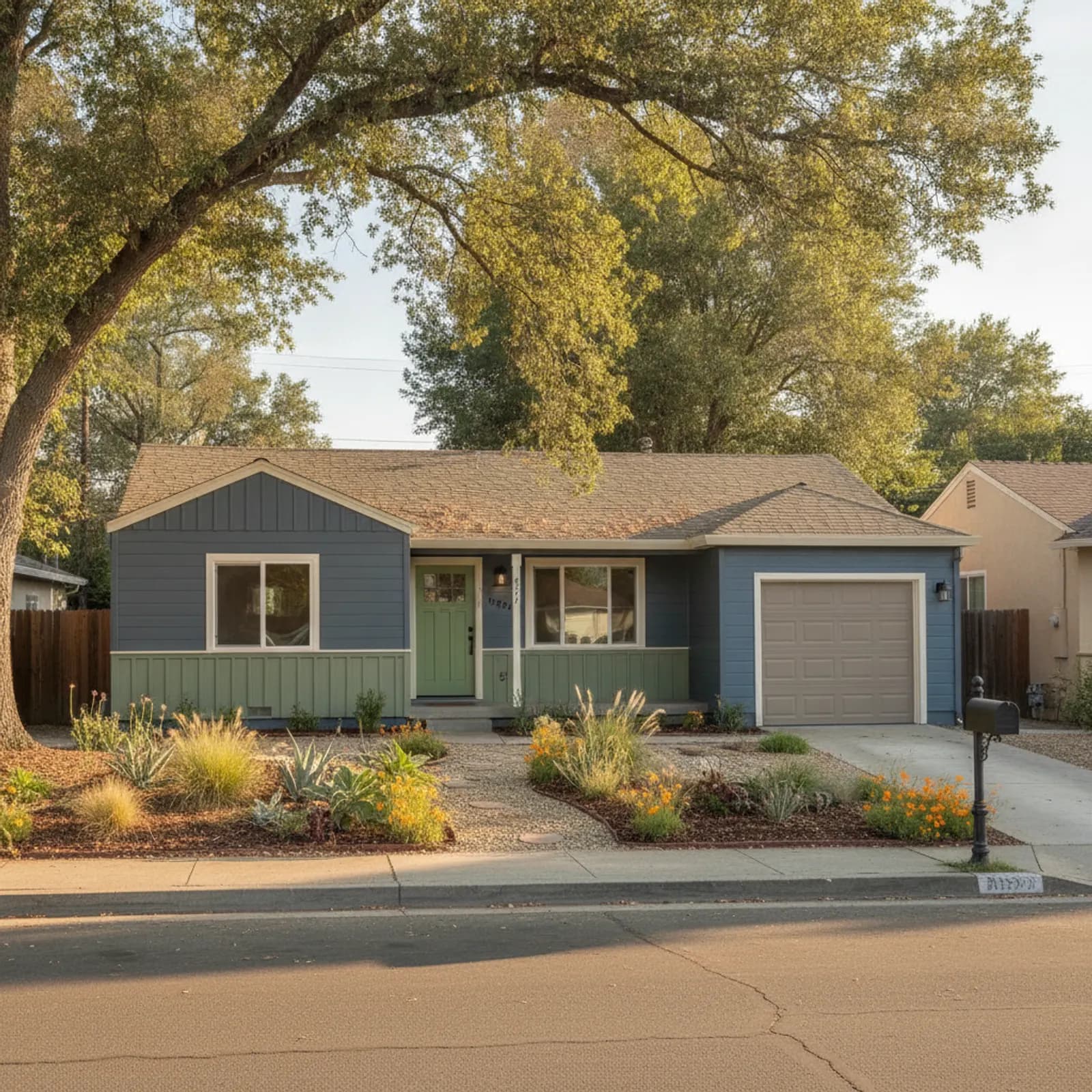
North Highlands is overwhelmingly 1950s and 1960s single-story tract and ranch homes — modest, repetitive postwar elevations built quickly and affordably, including a large share of former base-era worker housing. Many still wear their original hardboard, T1-11, or economy cladding, much of it long past its intended life. These low, simple rooflines modernize dramatically with a clean lap-and-batten re-side and an updated trim and color program — one of the most cost-effective ways to lift a North Highlands home out of decades of postwar sameness while genuinely upgrading its durability and weather protection at the same time.
Built for North Highlands's valley heat
North Highlands sits squarely in the Sacramento Valley heat belt, where long, intense, high-UV summers fade finishes and stress joints, worst on the south- and west-facing walls that take the afternoon load. Heat, not moisture or fire, is the controlling stressor here. That forces a fade-resistant, dimensionally stable cladding detailed with heat-aware gapping, fastening, and finish selection — the proven specification for this climate. The economy hardboard and composite materials on most postwar homes here were never built for this UV exposure, which is why chalking, cupping, and faded paint on the sun-facing elevations is the typical end-of-life pattern across the community.
Recommended materials for North Highlands
James Hardie fiber cement with a factory fade-resistant finish is the core recommendation for North Highlands. It is non-combustible, dimensionally stable in valley heat, and far more color-stable than the original hardboard and economy cladding on most homes here, holding its finish through the UV load that defeats lesser materials. Lap siding with board-and-batten accents differentiates the near-identical postwar ranch elevations that define so many North Highlands streets. Engineered wood is an acceptable option on these low-fire valley parcels where a homeowner wants deeper wood character at a different price point.
What an exterior project costs in North Highlands
North Highlands pricing follows the standard drivers, with the community's predominantly single-story postwar footprints often simplifying access compared with two-story stock. Trim complexity is usually modest on these ranch homes, so substrate and dry-rot condition once cladding is removed, window integration, and the weather-management scope tend to drive the total. Because so many homes share similar elevations, scope is fairly predictable, but we still provide a written, scoped estimate after an on-site assessment so bids can be compared on substance rather than a headline per-square-foot figure.
A former base community at re-side age
North Highlands's tie to the former McClellan Air Force Base shaped its housing: blocks of similar postwar homes went up in a compressed span to serve the base, and that same compression means a large share of them are reaching their original siding's end of life together. Neighbors are often facing the identical chalking and cupping at once. That concentration makes North Highlands a place where a thoughtful re-side both protects an aging home and visibly resets a tired, repetitive street that has carried its postwar cladding for far too long.
Orientation and the sun-facing walls
In North Highlands heat, orientation decides how a home ages. South- and west-facing walls take the heaviest afternoon sun and fade, chalk, and open joints years ahead of the shaded elevations on the same house. A smart re-side treats those sun-loaded faces as the priority for heat-aware detailing and finish selection. We note exposure during the on-site walk so the specification reflects how your particular elevations actually weather, rather than treating every wall on a postwar ranch the same.
Pairing windows with the re-side
Many North Highlands homes still carry original or early-replacement windows alongside aging siding, and when both are due, combining the work pays off. Replacing windows and siding together ensures correct flashing integration and avoids duplicated trim and weather-detailing later. On a modest postwar budget that integration matters even more, since doing the openings once avoids paying twice. We flag where a combined scope makes sense during the assessment so the home gets a properly integrated exterior rather than two disconnected projects.
Sacramento County, SMUD, and Sac Metro Fire
Working exteriors in North Highlands coordinates with a few local authorities. North Highlands is unincorporated Sacramento County, so building permits come through Sacramento County Building Permits and Inspection rather than a municipal department. Electric is SMUD, and gas is PG&E. Water is supplied by Sacramento Suburban Water District (SSWD). Fire response is the Sacramento Metropolitan Fire District (Sac Metro Fire). North Highlands sits adjacent to the former McClellan Air Force Base (now McClellan Park), and the base's environmental cleanup context still shapes some soil and ground-disturbance considerations on parcels immediately adjoining the McClellan boundary.
HZ10 climate on North Highlands's postwar setting
North Highlands is in James Hardie's HZ10 climate zone; installing HZ5 is a documented warranty misapplication. On the fire side, essentially all of North Highlands sits in Low or unmapped FHSZ territory under California's 2025 LRA Fire Hazard Severity Zone map — the WUI Code does not typically apply on these dense postwar parcels. Non-combustible fiber cement remains a low-regret upgrade regardless. Chapter 7A moved into the standalone WUI Code on January 1, 2026, but does not typically drive North Highlands's spec.
Our process in North Highlands
- Step 1
Consultation
We listen to your goals and assess your home on site — exposure, substrate, and architecture.
- Step 2
Design & Proposal
A clear written proposal with the right system specified for your climate and a transparent scope.
- Step 3
Expert Installation
Trained crews install to manufacturer best practices with careful weather-management detailing.
- Step 4
Walkthrough & Support
A final walkthrough, full cleanup, and a clear written record of the scope completed — work we stand behind.
North Highlands's dense, aging postwar stock rewards a modern, heat-durable re-side that delivers strong protection and a major curb-appeal lift at once. Factory-finished fiber cement is built for the valley UV that defeated the original economy materials on these homes. We scope every North Highlands project on site so the spec matches your home's orientation, substrate, and condition, and so the written estimate reflects real scope rather than a headline number.
FAQ
North Highlands — Common Questions
Fiber cement with a factory fade-resistant finish. North Highlands sits in the Sacramento Valley heat belt, and factory-finished fiber cement holds color and integrity far longer than the original hardboard and economy cladding on its postwar homes.
Yes — a modern lap-and-batten re-side with a refined trim and color program differentiates a repetitive postwar ranch elevation while upgrading durability.
Original 1950s–60s hardboard and economy cladding was never specified for the valley UV load; chalking, cupping, and fading on sun-facing elevations is the typical end-of-life pattern.
Low — North Highlands is a dense north-county valley community. Non-combustible fiber cement remains a sound, low-regret choice alongside its heat durability.
When feasible, yes — combining them ensures correct flashing integration and avoids duplicated trim work, which matters even more on a modest postwar budget.
South- and west-facing walls take the heaviest afternoon sun and age fastest; we account for orientation when specifying finishes and detailing.
Yes — the postwar tracts around the former McClellan Air Force Base and the rest of North Highlands.
A correctly installed fiber cement system commonly performs 30+ years in the valley heat, with factory finishes extending the cosmetic-refresh interval.
Helpful Exterior Guides