
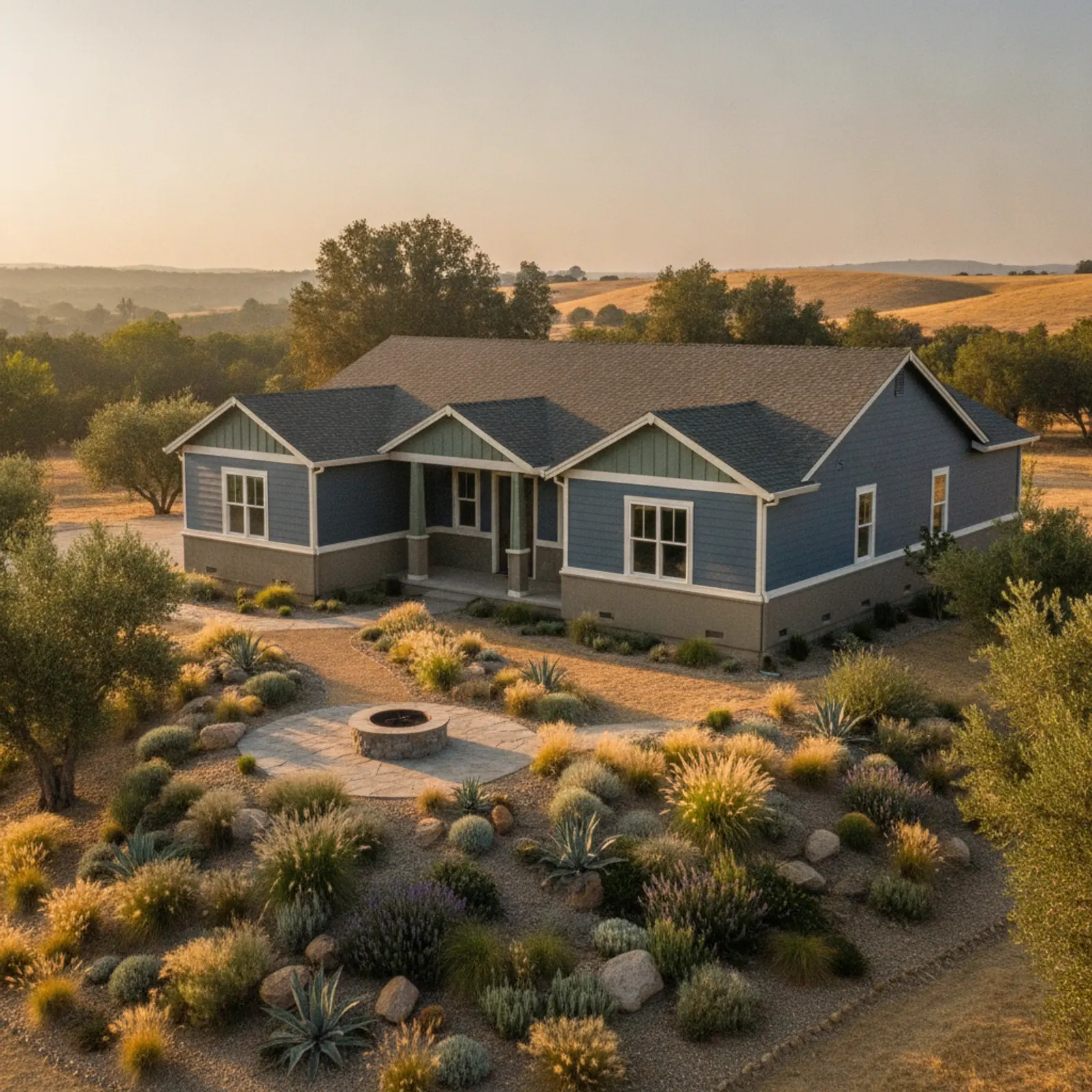
Exterior renovation in Rio Linda
Rio Linda is an older, semi-rural community in northern Sacramento County, distinguished from its denser suburban neighbors by its large lots, agricultural roots, and a housing mix that runs from early farmhouses to postwar ranch homes and homes on small acreage. That low-density, mixed-vintage character makes its re-side market different from a uniform tract: homes here vary widely in age and condition, many have outbuildings, and a good share carry decades-old siding under the same relentless valley sun. The practical goal for most owners is durable, heat-stable cladding that protects an aging, often individual home on a generous lot.
Why it matters here specifically
Open lots and little mature canopy mean Rio Linda homes take an unbroken UV load, and heat is the controlling stressor — not moisture or fire. The original hardboard, T1-11, and economy cladding on most older homes was never built for it, so chalking, cupping, and faded paint on the sun-facing walls is the typical end of life. Because there is no single builder elevation, condition varies sharply from an early farmhouse to a 1970s tract home, and many properties add detached garages or shops owners want coordinated with the house — so each re-side is scoped individually rather than as repeated tract work.
Considering an exterior project in Rio Linda?
Rio Linda housing and architecture
Rio Linda's stock is genuinely mixed: older single-story farmhouses and ranch homes from the community's agricultural era, postwar and mid-century tract homes infilled over the decades, and a scattering of manufactured and custom homes set on acreage. Unlike a master-planned suburb, there is no single repeated builder elevation, so each re-side is approached on its own terms — matching profile and trim to a modest ranch, an older farmhouse, or a custom home on a larger parcel. Many of these homes still wear original hardboard, T1-11, or economy cladding well past its life, and they respond strongly to a clean, heat-durable re-side that suits their semi-rural setting.
Built for Rio Linda's valley heat
Rio Linda sits in the Sacramento Valley heat belt, where long, intense, high-UV summers fade finishes and stress joints, worst on the south- and west-facing walls that take the afternoon load. With many homes on open lots and limited mature canopy, that sun exposure is unbroken. Heat, not moisture or fire, is the controlling stressor here, and it forces a fade-resistant, dimensionally stable cladding detailed with heat-aware gapping, fastening, and finish selection. The economy materials on most older Rio Linda homes were never built for this UV load, which is why chalking, cupping, and faded paint on the sun-facing walls is the typical end-of-life pattern.
Recommended materials for Rio Linda
James Hardie fiber cement with a factory fade-resistant finish is the core recommendation for Rio Linda. It is non-combustible, dimensionally stable in valley heat, and far more color-stable than the original hardboard and economy cladding on most homes here, holding its finish through the UV load that defeats lesser materials. For an older farmhouse or a custom home on acreage where a homeowner wants deeper wood character, engineered wood is an acceptable option on these low-fire valley parcels. The factory finish is the practical payoff in this sun, extending the interval before any sun-baked elevation needs a cosmetic refresh.
What an exterior project costs in Rio Linda
Rio Linda pricing follows the standard drivers, but the community's variety means scope is more home-by-home than in a uniform tract. Most homes are single-story, which often simplifies access, but age and condition vary widely — substrate and dry-rot condition once cladding is removed can differ sharply between an early farmhouse and a 1970s tract home. Window integration, trim, and the weather-management scope round out the total, and acreage properties may add outbuildings to the conversation. We provide a written, scoped estimate after an on-site assessment so each home is priced on its own substance.
Semi-rural lots and older, individual homes
Rio Linda's larger lots and lack of a single builder pattern mean re-sides here are individual projects rather than repeated tract work. An early farmhouse, a postwar ranch, and a custom home on acreage each call for a different read on profile, trim, and substrate condition. We approach each Rio Linda home on its own terms, checking the wall condition individually because decades of valley UV and the community's varied construction leave very different damage from one property to the next, even on the same street.
Outbuildings and acreage properties
Many Rio Linda properties include detached garages, shops, or other outbuildings on their larger lots, and owners often want those structures to match or coordinate with a re-sided main house. We can factor accessory structures into the conversation during the assessment so the property reads as a cohesive whole rather than a freshly clad house beside a faded outbuilding. Whether the goal is a full matching re-side or just a coordinated palette, we account for the extra structures that come with Rio Linda's acreage character.
Orientation and the sun-facing walls
On Rio Linda's open lots, orientation strongly governs how a home ages, with little canopy to soften the load. South- and west-facing walls take the heaviest afternoon sun and fade, chalk, and open joints years ahead of the shaded elevations. A smart re-side treats those sun-loaded faces as the priority for heat-aware detailing and finish selection. We note exposure during the on-site walk so the specification reflects how your particular elevations actually weather on an exposed semi-rural parcel.
Sacramento County, Rio Linda-Elverta CWD, and Sac Metro Fire
Working exteriors in Rio Linda coordinates with a few local authorities. Rio Linda is unincorporated Sacramento County, so building permits come through Sacramento County Building Permits and Inspection rather than a municipal department. Electric is SMUD, and gas is PG&E. Water is supplied by the Rio Linda / Elverta Community Water District (a customer-owned special district) — one of the few Sacramento County communities on a separate district rather than a citywide utility. Fire response is the Sacramento Metropolitan Fire District (Sac Metro Fire). The Rio Linda-Elverta Community Planning Advisory Council provides community-level input on land-use decisions.
HZ10 climate on Rio Linda's open-lot setting
Rio Linda is in James Hardie's HZ10 climate zone; installing HZ5 is a documented warranty misapplication. On the fire side, essentially all of Rio Linda sits in Low or unmapped FHSZ territory under California's 2025 LRA Fire Hazard Severity Zone map — this is settled semi-rural valley ground, and wildland fire is not the local threat. Chapter 7A moved into the standalone WUI Code on January 1, 2026, but does not typically drive Rio Linda's spec.
Our process in Rio Linda
- Step 1
Consultation
We listen to your goals and assess your home on site — exposure, substrate, and architecture.
- Step 2
Design & Proposal
A clear written proposal with the right system specified for your climate and a transparent scope.
- Step 3
Expert Installation
Trained crews install to manufacturer best practices with careful weather-management detailing.
- Step 4
Walkthrough & Support
A final walkthrough, full cleanup, and a clear written record of the scope completed — work we stand behind.
Rio Linda's varied, semi-rural stock rewards a heat-durable re-side approached home by home rather than as repeated tract work. Factory-finished fiber cement is built for the open-lot valley UV that defeated the original economy materials on these older homes. We scope every Rio Linda project on site — including any outbuildings — so the spec matches the home's vintage, orientation, and condition, and the written estimate reflects real scope.
FAQ
Rio Linda — Common Questions
Fiber cement with a factory fade-resistant finish. Rio Linda's open-lot, semi-rural setting in the valley heat belt delivers an unbroken UV load, and factory-finished fiber cement holds color and integrity far longer than original hardboard or economy cladding.
Yes — Rio Linda has no single builder elevation, so we approach each home on its own terms, matching profile and trim to a farmhouse, a ranch, or a custom home on a larger parcel.
Original hardboard, T1-11, and economy cladding were never specified for the open-lot valley UV load; chalking, cupping, and fading on sun-facing elevations is the typical end-of-life pattern here.
Yes — many Rio Linda properties have detached garages or shops, and we can factor accessory structures into the scope so the property reads as a cohesive whole.
Low — Rio Linda is a semi-rural valley-floor community. Non-combustible fiber cement remains a sound, low-regret choice alongside its heat durability.
When feasible, yes — combining them ensures correct flashing integration and avoids duplicated trim work.
South- and west-facing walls take the heaviest afternoon sun and age fastest, especially on open lots with little canopy; we account for orientation when specifying finishes.
A correctly installed fiber cement system commonly performs 30+ years in the valley heat, with factory finishes extending the cosmetic-refresh interval.
Helpful Exterior Guides