
Fire-Resistant Siding in Wilton
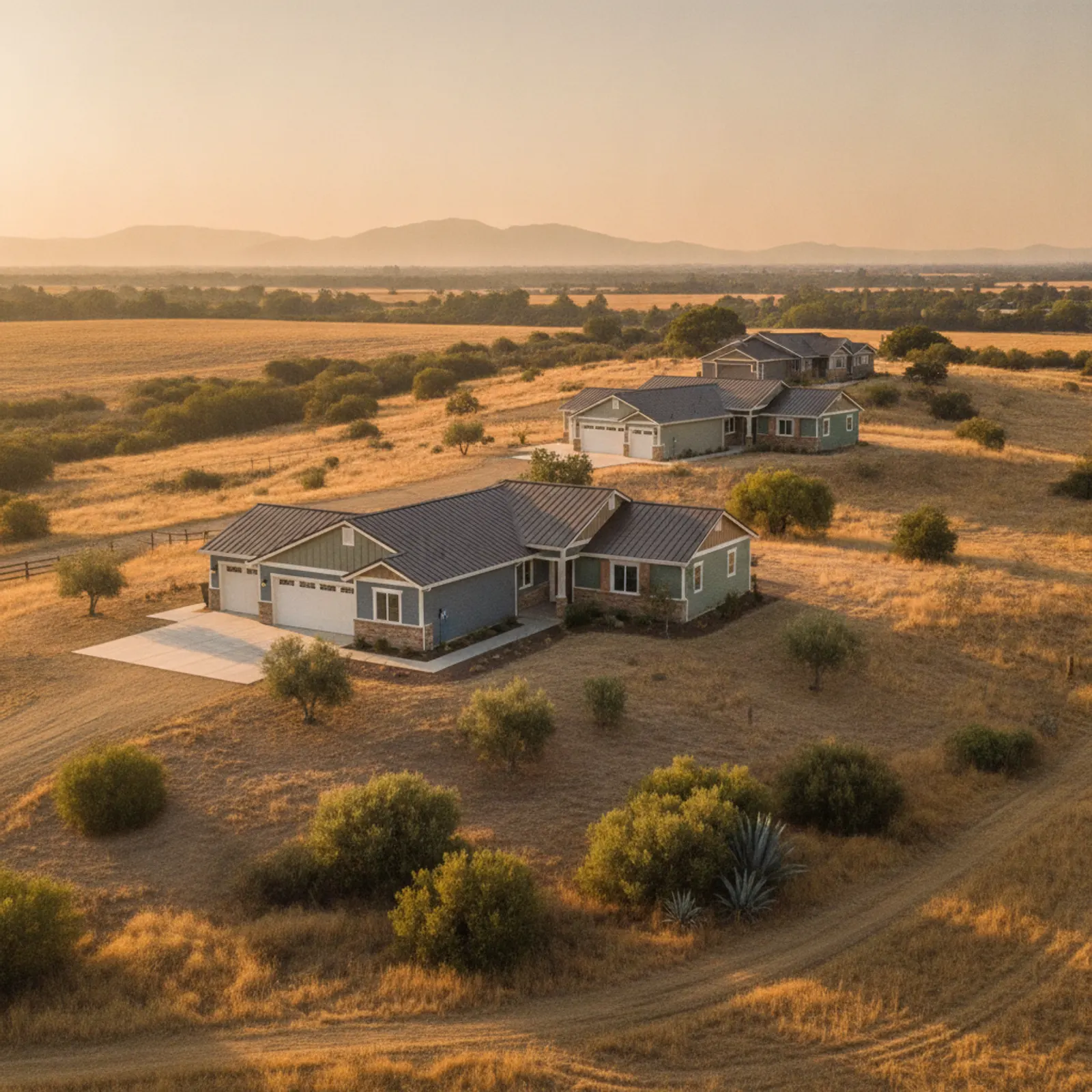
Wilton's fire exposure is real and it is specific: fast, wind-driven grass-and-oak fire moving across open ground, rather than the sustained timber fire of the foothills. Specifying for the wrong one produces a package that misses where the risk actually is.
On a parcel where grass runs to the house pad and the nearest help is some distance away, the building's own envelope carries more of the load than it would in a subdivision.
Ember-driven, which changes the priority order
Grass fire moves fast and low with wind behind it, and its primary threat to a structure is ember cast rather than prolonged radiant exposure. That reorders the hardening list relative to standard foothill advice. Vents come first, because they are the direct path into an attic or crawl space and a coarse or damaged screen is invisible from the ground. Ground transitions come next, where cladding meets grass, bark mulch, or stored material — an ember landing there has something to catch. Eaves matter. The wall face matters least of the four, which is worth saying on a page about cladding.
The first five feet do more than the wall
CAL FIRE reports that properties in compliance with defensible space requirements are five times more likely to survive a wildfire, and on a grass parcel the zone immediately around the structure is where that is won. Grass mown short and kept short through the season, nothing combustible stored against the wall, firewood moved well away, and mulch chosen with the exposure in mind. None of that is work we sell, and on many Wilton properties it does more than any cladding decision. We would rather tell you that and scope a smaller project than let a hardened wall sit inside untended fuel.
Outbuildings and the structure-to-structure path
Acreage parcels carry barns, shops, and equipment structures, and a combustible outbuilding upwind of the house is a genuine ignition path to it, with grass fuel providing the connection. Hardening the residence while leaving that path intact addresses half the problem. Where budget forces a sequence, we would frequently harden or clear around the threatening structure before upgrading the house, because that is where the actual risk chain runs. It is a property-level assessment rather than a building-level one.
What we will not claim
We will not tell you a hardened exterior makes a Wilton home fireproof or guarantees it survives. Structures built to a high standard have been lost and poorly built ones have survived, because outcomes depend on fire behaviour, wind, fuel, and available suppression far more than on any building decision — and on a rural parcel with longer response times that is more true, not less. What hardening does is improve the odds and remove the failure modes within your control. That is worth doing, and it is not the same as a promise.
Why this matters in Wilton
- Specified for Sacramento Valley conditions
- James Hardie as the recommended system
- Correctly detailed weather-resistive barrier and flashing
- Installed by a crew with 20 years combined experience
Recommended systems for Wilton
- James Hardie
- fiber cement
- LP SmartSide
Fire-Resistant Siding for Wilton homes
The full fire-resistant siding approach — materials, weather-resistive detailing, and the manufacturer standards we install to — is covered on the main service page, then specified for Wilton's conditions on this one.
Our Wilton process
- Step 1
Consultation
We listen to your goals and assess your home on site — exposure, substrate, and architecture.
- Step 2
Design & Proposal
A clear written proposal with the right system specified for your climate and a transparent scope.
- Step 3
Expert Installation
Trained crews install to manufacturer best practices with careful weather-management detailing.
- Step 4
Walkthrough & Support
A final walkthrough, full cleanup, and a clear written record of the scope completed — work we stand behind.
FAQ
Fire-Resistant Siding in Wilton — FAQ
It moves faster and lower with wind behind it, and its main threat to a structure is ember cast rather than prolonged radiant heat. That reorders the priorities: vents first, then ground transitions, then eaves, with the wall face last of the four — which is worth saying plainly on a cladding page.
Usually the first five feet around the structure. CAL FIRE links defensible-space compliance to a fivefold difference in survival odds, and on grass ground that is where it is won — grass kept short, nothing combustible against the wall, firewood moved well away. It is not work we sell, and it frequently beats any cladding decision.
Often yes, if it sits upwind and close enough to be an ignition path with grass connecting the two. Hardening the residence while leaving that path intact addresses half the problem. Where budget forces a sequence we would frequently start with the threatening structure.
It improves the odds and removes the failure modes you control. It does not guarantee an outcome — well-built homes have been lost and poorly built ones survived, because fire behaviour, wind, fuel, and suppression matter more than any building decision. On a rural parcel with longer response times that is more true rather than less.
Keep Exploring
More for Wilton homeowners
More in Wilton
Other exterior services in Wilton
Nearby Service Areas
Fire-Resistant Siding near Wilton
Helpful Exterior Guides