
Fiber Cement Siding in Camino
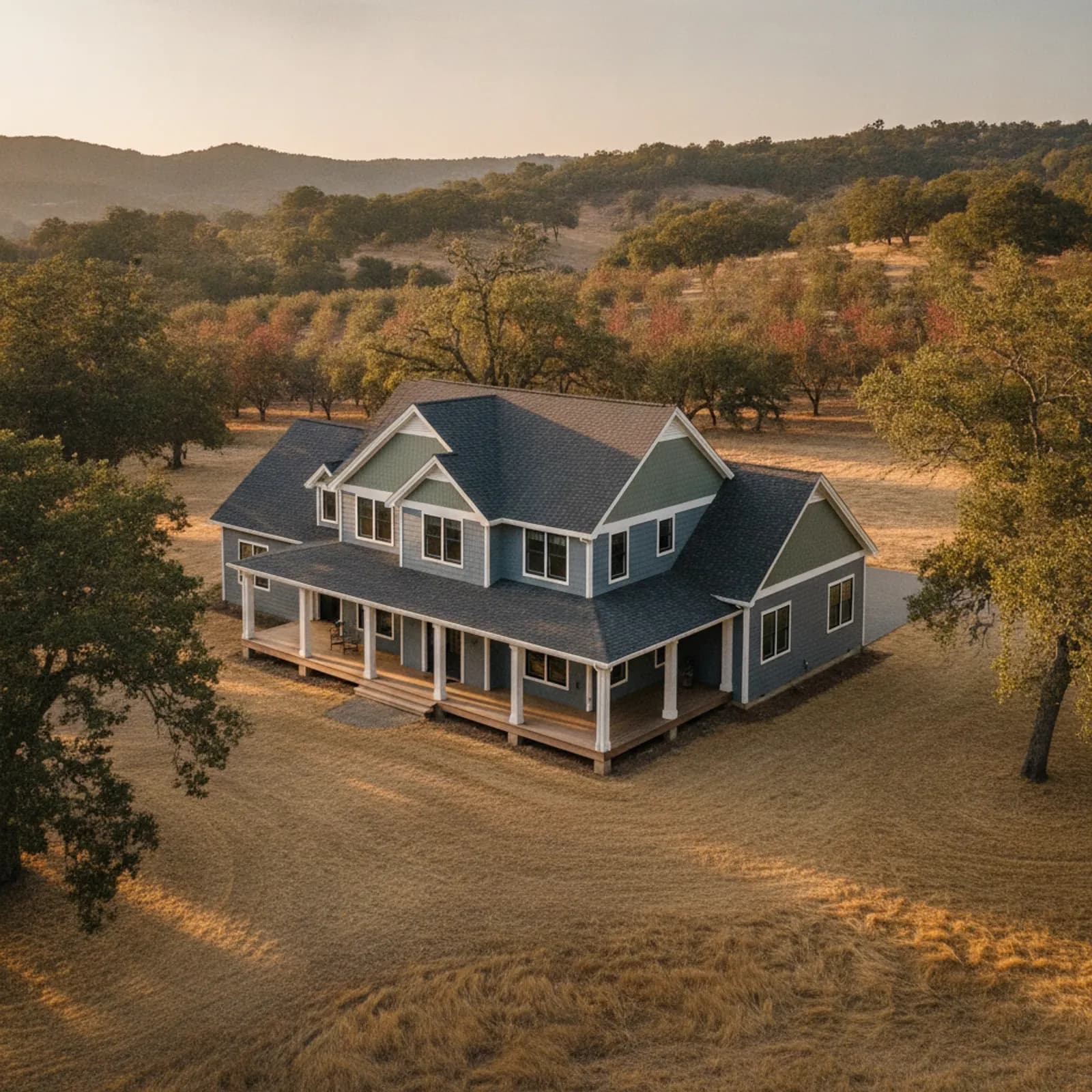
Camino sits on the Apple Hill ridge east of Placerville, high enough and cool enough that mixed-conifer forest runs right up against the apple ranches. That combination is what makes fiber cement the right wall here: this is genuine wildland-urban interface terrain with continuous forest fuel, and unlike most of the county it also gets real winter wet that a cladding assembly has to shed and dry from.
The ridge's orchard farmhouses, rural-residential forest homes, and older cabins were mostly built with wood, which is the one material that handles neither of those pressures well. Fiber cement is non-combustible and dimensionally stable through wet-dry cycling, so it answers both without asking the owner to pick one.
Forest fuel and orchard character in the same spec
The character that makes Camino worth living on — pine and cedar close to the house, orchard rows running to the property line — is also continuous fuel arranged around the structure. Fiber cement is non-combustible with a Class A flame-spread rating, so the wall stops contributing to that. What it does not do is change the fuel arrangement, and on this ridge the vegetation within the first few feet of the house is doing at least as much for the home's odds as the cladding is. We will say that plainly. The cladding decision is the one we can make for you; the defensible space around it is the one that decides more.
Winter wet is the part people underestimate
Camino sits high enough to take genuinely wet winters, and that separates it from the drier foothill towns further down the hill. On a ridge home the wall spends real time saturated, and the shaded north and forest-side elevations dry slowly under canopy. That puts weight on the drainage plane behind the cladding — a correctly lapped weather-resistive barrier, kickout flashings at every roof-wall junction, head flashing over openings, and bottom-course clearances that stay clear of soil, leaf litter, and orchard debris. On the wettest elevations a drained cavity behind the boards is worth specifying rather than leaving to chance.
Orchard farmhouses and what the profile should do
Camino's farmhouses and older ridge cabins carry a specific vernacular — simple massing, honest proportions, wood-forward elevations that read as agricultural rather than suburban. Fiber cement comes in lap and board-and-batten profiles that hold that read, and the trim proportion matters more than the profile choice for getting it right: an undersized casing on a farmhouse elevation makes the whole building look thin. Where a property has outbuildings, barns, or a tasting or packing structure, treating them consistently matters both aesthetically and practically, since a combustible outbuilding close to the house is a fire path to it.
Working on an orchard property
Camino projects often run on working ground, and the logistics differ from a subdivision. Access roads may be shared with orchard traffic, staging has to stay clear of the operation, and the season matters — a project through harvest is a different conversation from one in late winter. Wells, propane, and outbuildings sit closer to the work than they would in town. None of this is complicated, but it is worth scoping before the schedule is set rather than discovering it in week two, and it is one of the questions worth asking any contractor bidding a property up here.
Why this matters in Camino
- Specified for Sierra Foothills conditions
- fiber cement as the recommended system
- Correctly detailed weather-resistive barrier and flashing
- Installed by a crew with 20 years combined experience
Recommended systems for Camino
- fiber cement
- James Hardie
- LP SmartSide
Fiber Cement Siding for Camino homes
The full fiber cement siding approach — materials, weather-resistive detailing, and the manufacturer standards we install to — is covered on the main service page, then specified for Camino's conditions on this one.
Our Camino process
- Step 1
Consultation
We listen to your goals and assess your home on site — exposure, substrate, and architecture.
- Step 2
Design & Proposal
A clear written proposal with the right system specified for your climate and a transparent scope.
- Step 3
Expert Installation
Trained crews install to manufacturer best practices with careful weather-management detailing.
- Step 4
Walkthrough & Support
A final walkthrough, full cleanup, and a clear written record of the scope completed — work we stand behind.
FAQ
Fiber Cement Siding in Camino — FAQ
It removes the wall as a fuel source, which is meaningful — but on this ridge the vegetation within the first few feet of the house and the eave and vent detailing are doing at least as much work. We would rather tell you that than sell cladding as the whole answer. Siding is one layer of a whole-property defensible-space strategy, not a guarantee.
It changes the detailing rather than the material. Camino sits high enough for genuinely wet winters, and forest-side elevations dry slowly under canopy, so the drainage plane, kickout flashings, and bottom-course clearances carry more weight here than in the drier foothill towns downhill. On the wettest walls a drained cavity behind the boards is worth specifying.
Yes, and the trim proportion matters more than the profile for getting there. Lap and board-and-batten profiles hold the agricultural read these buildings have, but an undersized casing will make a farmhouse elevation look thin regardless of material. It is worth settling proportions before ordering.
Worth including in the conversation, for two reasons. Consistency across the property reads better, and more practically, a combustible outbuilding close to the house is a fire path to it. On an orchard property that is a real consideration rather than a theoretical one.
Keep Exploring
More for Camino homeowners
More in Camino
Other exterior services in Camino
Nearby Service Areas
Fiber Cement Siding near Camino
Helpful Exterior Guides