Exterior renovation in Cool
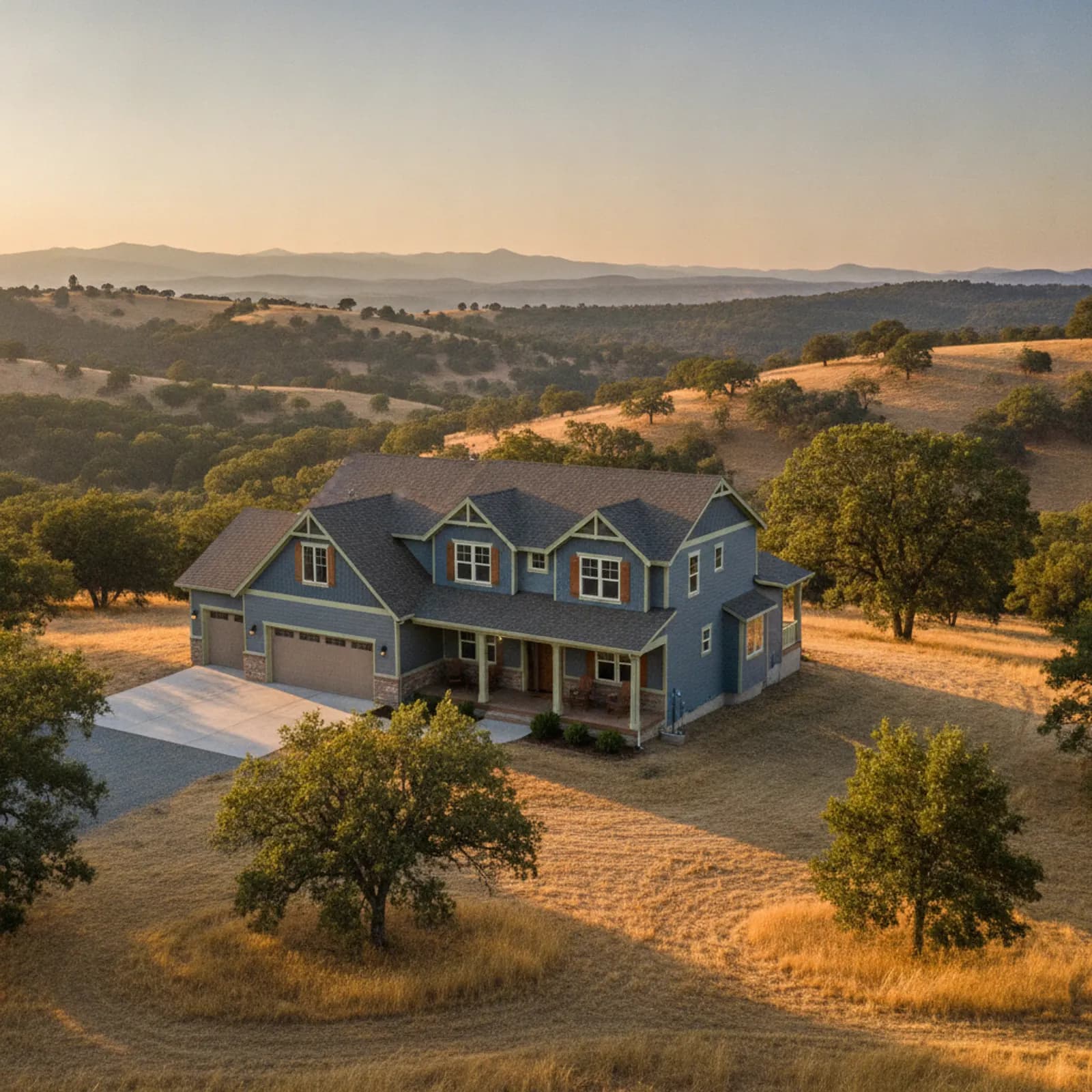
Cool is a small community on Highway 49 in the western El Dorado foothills, sitting on the open oak-grassland tableland just above the deep American River canyon near the Highway 49 river crossing. It is largely a place of rural-residential ranchettes, horse properties, and custom oak-woodland homes spread across exposed, sun-baked terrain rather than tucked into dense forest. That openness shapes the exterior conversation: Cool's homes catch full foothill sun and sit in fast-curing grass-and-oak fuel that runs right to the canyon rim. Our Cool work centers on durable, non-combustible cladding that stands up to the exposure on these spread-out, wind-open parcels.
Open-ground fire behaves differently
It's tempting to assume that no dense forest means less fire risk, and that's the wrong read here. Grass and oak cure fast and burn fast, and the canyon funnels afternoon wind across the tableland, so embers travel and ground-contact ignition from a running grass fire is a live threat on these open lots. That changes where the hardening goes: we still specify a non-combustible fiber cement wall, but we concentrate detailing at the eaves, vents, and ground-to-wall transitions where wind-driven embers and grass flame reach first, and pick factory finishes that hold color against the full-day, unshaded UV these homes take.
Considering an exterior project in Cool?
Cool housing and architecture
Cool's housing is predominantly rural-residential — ranchettes, horse-property homes, and custom oak-woodland builds from the 1980s through the 2000s, set on acreage rather than clustered in a townsite. Many of these homes wear stucco, original wood, or T1-11 that has weathered hard under open foothill sun, and few have the dense canopy that defines the deeper Divide towns. The spread-out, single-story character means re-cladding here is usually a whole-elevation job on an exposed home rather than tight period-matching. We treat these as durability-and-fire projects: retire the tired combustible or fade-prone cladding for a hardened wall built for relentless sun and grass-fire exposure.
Cool's open-foothill climate
Cool sits in the hot, dry western-foothill band, and its defining condition is exposure — open oak-grassland with little shade, full-day UV, and the fast-curing grass-and-oak fuel that turns these tablelands tinder-dry every summer. Wind moves freely across the open terrain and funnels along the nearby American River canyon, which makes ember behavior a real concern even on parcels without forest. The snow line stays above town, so heat, sun, and wind drive the cladding's life far more than freeze cycles do, while winter rain still calls for clean water-shedding at the ground edges. It is dry, exposed, fire-prone country.
Hardening open-terrain homes near the canyon
Cool's wildfire exposure is high in the way open foothill country is dangerous — fast-spreading grass-and-oak fire driven by canyon wind rather than a slow-burning timber stand. We specify Class A non-combustible fiber cement and harden the ignition-prone points — eaves, vents, and ground-to-wall transitions — because on wind-open parcels embers concentrate at edges and undersides and ground-contact ignition from grass fire is a live threat. The canyon's wind funneling makes that detailing especially worthwhile here. Retiring combustible wood or T1-11 for a non-combustible wall is a major step on these exposed ranchettes, and we document materials to support defensible-space and insurability discussions.
Recommended materials for Cool
Non-combustible fiber cement, James Hardie systems included, is our recommendation for Cool because it directly answers the two dominant stressors: open-terrain grass-and-oak fire exposure and brutal, unshaded foothill UV. Factory-finished fiber cement holds color far better than paint on the fade-prone sun-facing walls these spread-out homes present, while delivering the non-combustible performance the canyon-rim exposure demands. We advise against combustible cladding given the grass-fire and wind exposure; engineered-wood LP SmartSide can suit a lower-exposure interior parcel, but on Cool's open, sun-beaten ranchettes the non-combustible wall is the straightforward call.
What an exterior project costs in Cool
Cost in Cool is shaped by acreage and exposure rather than dense-forest access: spread-out ranchettes and horse properties mean longer drives and on-site staging, and tall, fully exposed single-story elevations can carry meaningful wall area. Removing weathered wood or T1-11 from a sun-beaten home regularly reveals substrate or dry-rot at the ground transitions. Fire-detailing scope is core to the value here given the canyon-wind exposure, and protecting existing defensible-space clearing factors into the plan. We assess each property on site and provide a written, itemized estimate that governs the work, with no dollar figures quoted before we have seen the home.
Ranchettes and horse properties
Most of Cool is rural-residential acreage — ranchettes and horse properties set across open oak grassland with little shade between homes. On these, re-cladding is typically a whole-home durability-and-fire upgrade: retire the weathered combustible or fade-worn cladding for a non-combustible wall built to take full sun and grass-fire exposure all season long. The spread-out siting means we plan staging and material delivery around the parcel's own access, barns, and outbuildings from the start, since these properties rarely have the tight street frontage of a townsite. Walking that layout on site is how we keep the work efficient on a large open lot.
The American River canyon rim
Cool sits just above the deep American River canyon near the Highway 49 crossing, and that proximity drives much of the wind-and-ember behavior we detail for here. Parcels nearer the rim feel the canyon's wind funneling most strongly, so we pay particular attention to edge and underside detailing — eaves, vents, and ground transitions — where ember exposure concentrates on these open, wind-raked lots. The canyon also channels afternoon wind across the tableland in predictable ways, which informs how we prioritize the most exposed elevations of a home. We scope that exposure parcel by parcel rather than treating every Cool lot the same.
Sun-driven fade and resale
The unshaded, full-day sun in Cool is hard on painted siding, so a factory-finished non-combustible exterior that holds its color is a visible, practical upgrade on these fully exposed homes. For a rural-residential property here, a clean, fade-resistant, hardened wall reads well to buyers who understand the foothill exposure and want a low-maintenance home that already addresses it. Because so many parcels in Cool carry weathered, repainted wood, a home that has already moved to a stable non-combustible wall stands apart on the local market. We frame the upgrade in those terms — durability and exposure first, appearance as the visible payoff.
Cool is unincorporated: county permits, GDPUD water, HZ10 + Very-High FHSZ
Cool is not a city. It is an unincorporated community in El Dorado County on the tableland above the American River canyon near the Highway 49 crossing. Building permits go through El Dorado County's Community Development Agency in Placerville. Electric and gas are PG&E, with high-PSPS exposure. Water is supplied by the Georgetown Divide Public Utility District (GDPUD) on some parcels, with private wells on others. Fire response is Georgetown Fire Protection District alongside CAL FIRE. Cool is in James Hardie's HZ10 zone; installing HZ5 is a documented warranty misapplication. Essentially all of Cool sits in Very High FHSZ or State Responsibility Area under California's 2025 LRA Fire Hazard Severity Zone map, and the 2025 California Wildland-Urban Interface Code governs the exterior wall on nearly every re-side. Chapter 7A moved into the standalone WUI Code on January 1, 2026.
Our process in Cool
- Step 1
Consultation
We listen to your goals and assess your home on site — exposure, substrate, and architecture.
- Step 2
Design & Proposal
A clear written proposal with the right system specified for your climate and a transparent scope.
- Step 3
Expert Installation
Trained crews install to manufacturer best practices with careful weather-management detailing.
- Step 4
Walkthrough & Support
A final walkthrough, full cleanup, and a clear written record of the scope completed — work we stand behind.
In Cool the goal is an exterior built for open-foothill reality — relentless sun, grass-and-oak fire, and canyon wind — on homes that catch all of it. We scope every Cool project on site so the spec fits your parcel's exposure, access, and real fire profile.
FAQ
Cool — Common Questions
High, in the open-terrain way: fast grass-and-oak fire driven by wind off the American River canyon, which is why non-combustible cladding and hardened edge detailing are our baseline here.
Usually yes. Retiring combustible T1-11 for non-combustible fiber cement is a major hardening step on an exposed, wind-open foothill parcel and ends the constant repainting.
No. Open oak grassland cures fast and burns quickly, and canyon wind moves fire and embers across exposed parcels, so the exposure is still high even without dense timber.
Cool's homes sit in open, unshaded terrain with full-day UV that punishes paint. Factory-finished fiber cement holds color far better on those sun-facing walls.
Rarely. The snow line sits above town, so heat, UV, and canyon wind drive the cladding's working life far more than freeze cycles do.
Yes. James Hardie fiber cement answers both the open-terrain fire exposure and the relentless foothill UV, which is why it is our core recommendation here.
It mainly affects staging and delivery, which we plan around your parcel's access and outbuildings after walking the property on site.
A correctly installed system commonly performs 30+ years in this open-foothill climate while resisting the sun-driven fade that ages painted siding quickly.
Explore
Exterior Services
Helpful Exterior Guides