
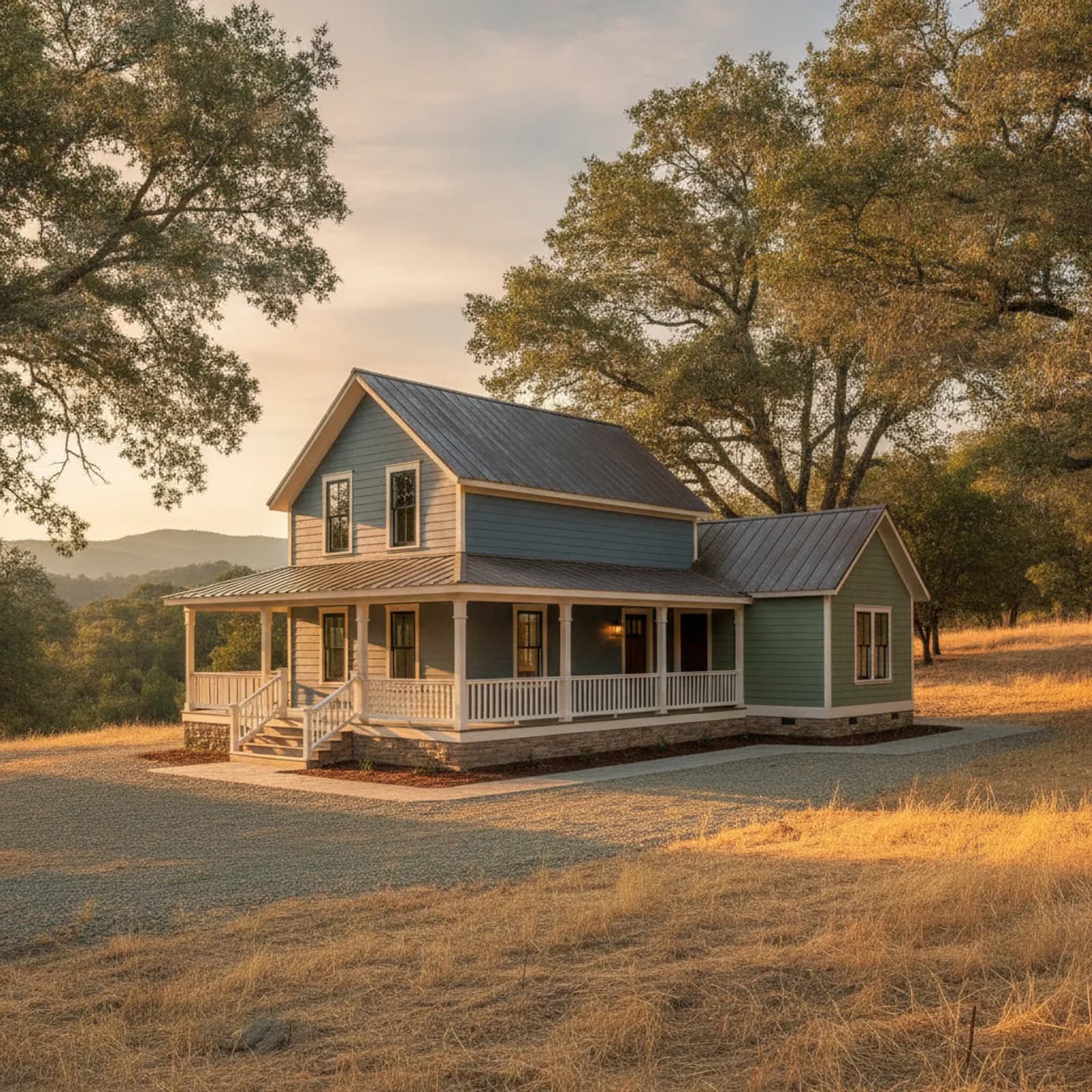
Fiber Cement Siding in Diamond Springs
Fiber cement is the core Diamond Springs recommendation because it answers both of the town's controlling stressors at once: it shrugs off the hard, dry foothill heat and UV that destroy painted wood and hardboard here, and it is Class A non-combustible for the elevated wildfire exposure on this established town's brushy outskirts south of Placerville.
Why the material fits a hot foothill town
Diamond Springs sits low enough in the foothills to take genuinely punishing summer heat, and fiber cement is built for exactly that environment. Unlike vinyl, it will not soften, sag, or distort on a south wall during a string of 100-degree afternoons, and unlike hardboard it does not swell and delaminate as the daily heat-and-humidity swing works the wall. The cement-and-fiber body is dimensionally stable through the heat cycling these elevations see, so fasteners stay set and joints stay tight. For the postwar and ranch stock around town that has already lost one or two layers of cladding to the sun, fiber cement is the choice that ends the cycle rather than repeating it. It is the practical foothill-heat answer before fire even enters the conversation.
Factory finishes against foothill UV
The sun is the other half of the Diamond Springs case for fiber cement. Field-applied paint on the sun-baked walls here fades and chalks fast, which is why so many older homes look tired well before the cladding has failed. Baked-on factory color systems are engineered for high-UV exposure and hold their tone far longer than a brush coat applied in the driveway, so the wall keeps looking finished through the long foothill summers. Even when an eventual refresh comes due, the fiber-cement substrate underneath keeps performing — the color cycle and the structural cycle are decoupled. For a Diamond Springs homeowner tired of repainting a heat-stressed exterior, that durability is the everyday payoff, separate from the fire performance.
Non-combustible for the elevated-fire edges
Diamond Springs carries real, if not extreme, wildfire exposure, concentrated on the grassy and oak-brush parcels toward the town's outskirts and the Highway 49 corridor. Fiber cement's non-combustibility matters most there: it will not feed embers that settle into siding gaps, behind trim, or against the foundation course during a Gold Country wind event. We treat the plank as one layer of a system — tight butt joints, correct ground clearance so bark mulch and leaf litter cannot pile against the bottom run, and flashed transitions at decks and stairs. On the more protected in-town blocks the same board is a sensible baseline; on the exposed acreage it is the central reason to choose the material at all.
Matching profiles to mixed Diamond Springs stock
Because Diamond Springs is an older town built across several eras, fiber cement earns its keep partly through versatility. A mid-century ranch wants a clean horizontal lap with a modest reveal, a postwar cottage near the historic core may read better in a traditional narrow lap, and a newer acreage home can carry board-and-batten or a mixed composition. Fiber cement is milled in all of those profiles, so we fit the board to the building rather than forcing one look across town. We confirm the existing exterior's substrate and any hidden additions during assessment, then specify a profile and finish that suits both the house and its sun exposure. The result is a re-clad that belongs on its particular Diamond Springs street while solving the heat and fire problems underneath.
Why this matters in Diamond Springs
- Specified for Sierra Foothills conditions
- fiber cement as the recommended system
- Correctly detailed weather-resistive barrier and flashing
- Installed by a crew with 20 years combined experience
Recommended systems for Diamond Springs
- fiber cement
- James Hardie
- LP SmartSide
Fiber Cement Siding for Diamond Springs homes
The full fiber cement siding approach — materials, weather-resistive detailing, and the manufacturer standards we install to — is covered on the main service page, then specified for Diamond Springs's conditions on this one.
Our Diamond Springs process
- Step 1
Consultation
We listen to your goals and assess your home on site — exposure, substrate, and architecture.
- Step 2
Design & Proposal
A clear written proposal with the right system specified for your climate and a transparent scope.
- Step 3
Expert Installation
Trained crews install to manufacturer best practices with careful weather-management detailing.
- Step 4
Walkthrough & Support
A final walkthrough, full cleanup, and a clear written record of the scope completed — work we stand behind.
FAQ
Fiber Cement Siding in Diamond Springs — FAQ
The dry foothill heat here softens and distorts vinyl on sun-facing walls; fiber cement stays dimensionally stable through the heat cycling and is non-combustible for the town's elevated fire edges.
Far less than field paint — baked-on factory finishes are engineered for high foothill UV, and the substrate keeps performing well beyond any eventual color refresh.
Yes — even away from the brushy edges, its heat and UV durability ends the repaint-and-replace cycle that older Diamond Springs cladding falls into, and the non-combustibility is sensible baseline insurance.
Fiber cement — engineered wood is combustible on a foothill town with elevated fire exposure, and there is no real durability gain in this heat to offset the risk.
Keep Exploring
More for Diamond Springs homeowners
More in Diamond Springs
Other exterior services in Diamond Springs
Nearby Service Areas
Fiber Cement Siding near Diamond Springs
Back to
El Dorado County & Diamond Springs
Helpful Exterior Guides