
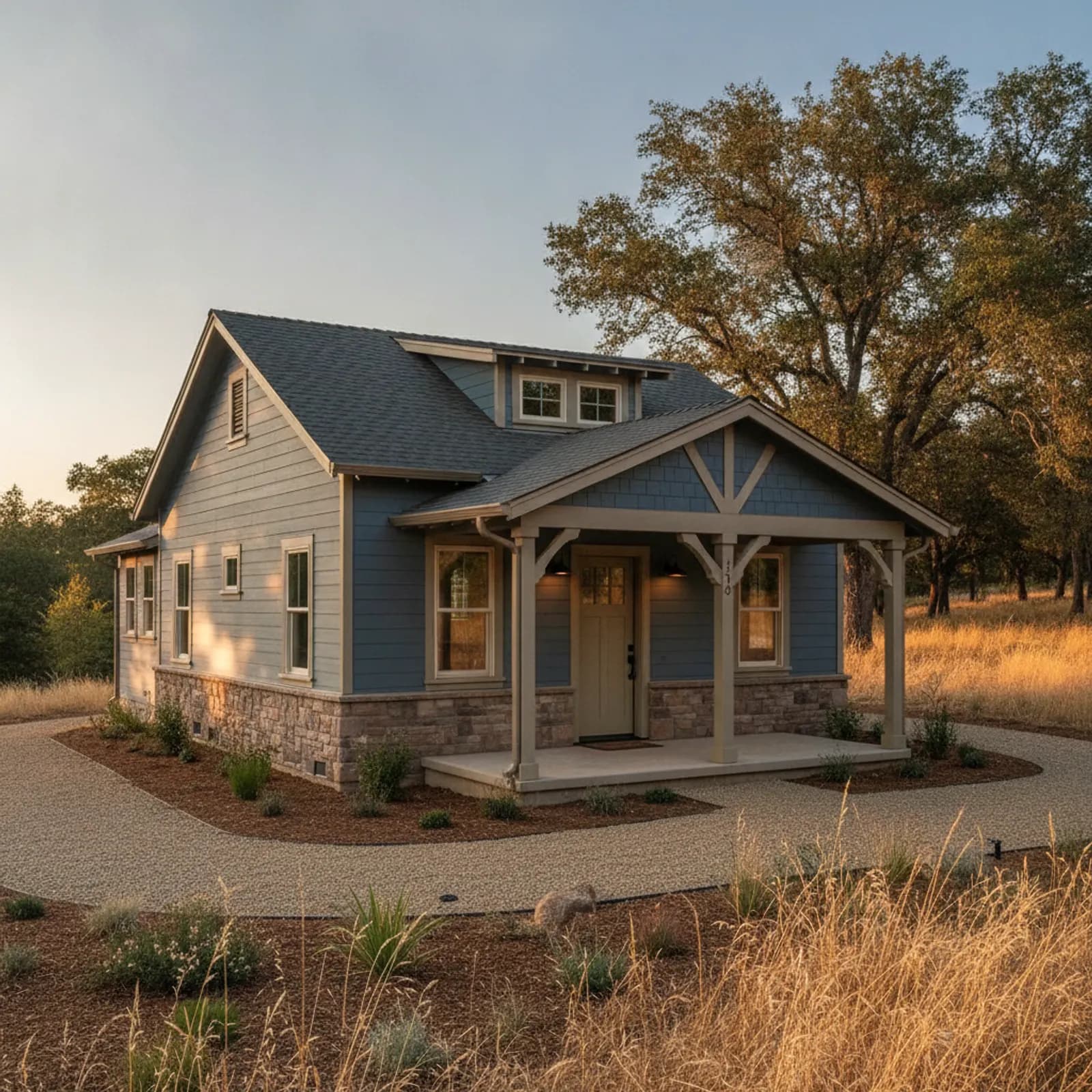
Exterior Contractor in Diamond Springs
Diamond Springs is an older working-foothill town just south of Placerville — postwar cottages, mid-century ranches, and small acreage lots that have weathered decades of hard, dry heat. The exterior conversation here pulls on two fronts: relentless summer UV and heat that age cladding, paint, and windows together, and elevated wildfire exposure on the brushy outskirts. Solving both at once, on an older home that has aged unevenly, is a coordination problem rather than a single-trade fix.
An exterior contractor's value in Diamond Springs is treating the wall, the windows, the weather barrier, and the trim as one assembly built for this climate — not three trades arriving in sequence over five years with different priorities. The heat that degrades the paint also degrades the window seals and the flashing, so the upgrades belong together, scoped and detailed by one accountable party.
What an integrated Diamond Springs exterior includes
On a Diamond Springs home an integrated scope strips the heat-tired cladding (often hardboard, T1-11, or chalked wood lap), corrects the weather-resistive barrier, replaces ember-vulnerable vents with ember-resistant equivalents on the exposed parcels, integrates window flashing into the new assembly while upgrading to climate-appropriate glazing, and re-clads in heat-stable, non-combustible fiber cement with a UV-durable factory finish. The ground-to-wall transition is detailed for both ember defense and clearance from landscape contact. One project, one envelope, built for foothill heat and the town's fire edges together.
Where the split-trade exterior fails in Diamond Springs
Split-trade work fails here because the heat and fire problems do not respect trade boundaries. A siding-only crew re-clads the wall and leaves the failing single-pane windows pouring summer heat in and the original flashing leaking behind the new boards. A window-only crew pockets new sashes into old, compromised openings. Each looks finished; neither fixes the interfaces where the climate does its damage. An integrator owns the cladding, the openings, and the barrier as one scope, so the new exterior performs as a system through the foothill summers rather than as a set of disconnected upgrades.
Materials and detailing we specify for Diamond Springs
We specify Class A, heat-stable fiber cement in profiles matched to the home — clean lap for a mid-century ranch, narrower lap for a postwar cottage, board accents where the composition calls for it — finished in UV-durable factory color suited to the town's working-foothill palettes. Climate-appropriate dual-pane low-E windows handle the solar gain, ember-resistant vents and hardened eaves serve the exposed parcels, and every opening is flashed into the weather barrier while the wall is open. The fire detailing and the heat detailing are the same project, not competing scopes.
One accountable contractor across an older town's stock
Diamond Springs homes have usually been touched by several trades over decades, leaving mismatched repairs and interfaces nobody owns. The integrator's job is to take responsibility for the whole envelope so those seams stop being failure points. We document the existing conditions, sequence tear-off, barrier, windows, and cladding so the wall is never left open to a foothill storm, and detail the transitions — siding to window, wall to roof, cladding to grade — as deliberate junctions rather than handoffs between crews. The result on a Diamond Springs home is an exterior that reads as one coherent upgrade and performs as one system against the heat and the fire edges alike.
Why this matters in Diamond Springs
- Specified for Sierra Foothills conditions
- fiber cement as the recommended system
- Correctly detailed weather-resistive barrier and flashing
- Installed by a crew with 20 years combined experience
Recommended systems for Diamond Springs
- fiber cement
- James Hardie
- LP SmartSide
Exterior Contractor for Diamond Springs homes
The full exterior contractor approach — materials, weather-resistive detailing, and the manufacturer standards we install to — is covered on the main service page, then specified for Diamond Springs's conditions on this one.
Our Diamond Springs process
- Step 1
Consultation
We listen to your goals and assess your home on site — exposure, substrate, and architecture.
- Step 2
Design & Proposal
A clear written proposal with the right system specified for your climate and a transparent scope.
- Step 3
Expert Installation
Trained crews install to manufacturer best practices with careful weather-management detailing.
- Step 4
Walkthrough & Support
A final walkthrough, full cleanup, and a clear written record of the scope completed — work we stand behind.
FAQ
Exterior Contractor in Diamond Springs — FAQ
Because the foothill heat damages cladding, window seals, and flashing together, and the failure points are the interfaces between them. One accountable contractor scopes the wall, windows, and barrier as a single envelope, so the upgrades actually work as a system.
Elevated and real, heaviest on the brushy outskirts and Highway 49 parcels rather than every block. The hardening scope follows the assessment — serious on exposed lots, sensible baseline on protected in-town ones.
In this climate, usually yes — old single-pane and aluminum windows are the biggest summer-heat weak point, and doing them with the re-side lets us flash the openings into the new barrier correctly.
Most single-family homes here are four to seven weeks of active work, depending on size, the amount of hidden substrate repair the older stock needs, and how much hardening the parcel warrants.
Keep Exploring
More for Diamond Springs homeowners
More in Diamond Springs
Other exterior services in Diamond Springs
Nearby Service Areas
Exterior Contractor near Diamond Springs
Back to
El Dorado County & Diamond Springs
Helpful Exterior Guides