
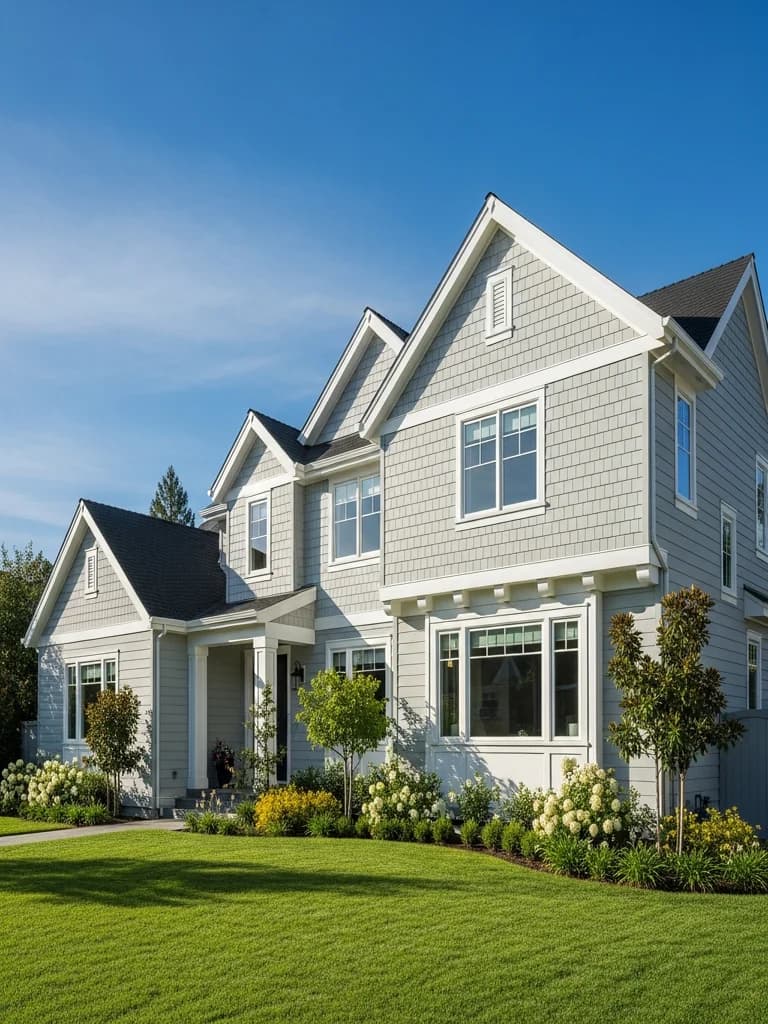
Fire-Resistant Siding in Soda Springs
It is a mistake to read the snowiest place in California as low fire risk. Soda Springs sits in dense Sierra conifer, and the short dry window between snowmelt and the first autumn storms is a genuine fire season — on the same over-crowded forest that concerns fire agencies throughout the Tahoe region.
What makes the summit distinctive is not the exposure so much as who is there to manage it. This is near-total second-home country, and defensible space is the one wildfire measure that reliably lapses when nobody is present.
The measure that lapses is the measure that works
CAL FIRE reports that properties in compliance with defensible space requirements are five times more likely to survive a wildfire. That is the strongest single number in home wildfire preparedness, and it describes recurring seasonal work — clearing needle litter from gutters, decks, and the ground immediately around the structure, keeping vegetation cut back, moving stored firewood off walls. On a Serene Lakes cabin occupied a few weeks a year, none of that happens between visits. The uncomfortable implication is that the measure with the best evidence behind it is precisely the one an absentee owner is least likely to maintain, which is why the passive parts of the building have to carry more of the load here than they would on a full-time residence.
Passive hardening, ranked for an absent owner
Given that, the priorities differ from standard advice. Ember-resistant vents come near the top, because vents are a primary ember entry path and a rated vent keeps working with nobody present. Enclosing open eaves and exposed rafter tails follows, since those collect embers under the roof edge and no maintenance substitutes. Non-combustible cladding removes the largest continuous combustible surface. An attached wood deck is frequently the single largest vulnerability on a summit cabin, both because it burns and because debris accumulates underneath it all season unattended. Glazing matters more than owners expect, since glass often fails under radiant heat before the wall does. Cladding is on that list but is not at the top, and we would rather say so than sell the biggest line item.
Reconciling fire detailing with the snowiest place in California
This is the part that goes wrong when a crew applies foothill hardening details at summit elevation. Fire detailing wants a tight envelope with restricted openings; snow and moisture management wants an assembly that can drain and dry. Ember-resistant venting still has to deliver the airflow the roof assembly needs, or you have traded a fire risk for an attic moisture problem — and at Soda Springs the moisture load is not theoretical. Grade clearances have to satisfy both the fire requirement and real snow depth. Reconciling the two is most of what doing this properly at 7,000 feet actually involves, and it is why a summit hardening job is not a foothill hardening job with more insulation.
Arranging what you cannot do yourself
The single highest-value thing most absentee summit owners can organise has nothing to do with construction: someone local who clears gutters, decks, and the first few feet around the structure on a seasonal cadence rather than a visit schedule. It is comparatively inexpensive and it does the work the five-times statistic is actually describing. We will recommend it even though it is not work we perform, because a hardened building surrounded by a season's accumulated fuel has not achieved what the owner paid for. And we will not tell you that any of this makes a building fireproof — well-built homes have been lost and poorly built ones have survived, because outcomes depend on fire behaviour, weather, fuel, and terrain far more than on any building decision.
Why this matters in Soda Springs
- Specified for Donner Summit / Sierra Alpine conditions
- non-combustible fiber cement rated for extreme snow load as the recommended system
- Correctly detailed weather-resistive barrier and flashing
- Installed by a crew with 20 years combined experience
Recommended systems for Soda Springs
- non-combustible fiber cement rated for extreme snow load
- snow-depth grade clearances and meltwater flashing
- freeze-thaw-tolerant gapped and back-primed joints
- stainless or coated fasteners for high cycle counts
Fire-Resistant Siding for Soda Springs homes
The full fire-resistant siding approach — materials, weather-resistive detailing, and the manufacturer standards we install to — is covered on the main service page, then specified for Soda Springs's conditions on this one.
Our Soda Springs process
- Step 1
Consultation
We listen to your goals and assess your home on site — exposure, substrate, and architecture.
- Step 2
Design & Proposal
A clear written proposal with the right system specified for your climate and a transparent scope.
- Step 3
Expert Installation
Trained crews install to manufacturer best practices with careful weather-management detailing.
- Step 4
Walkthrough & Support
A final walkthrough, full cleanup, and a clear written record of the scope completed — work we stand behind.
FAQ
Fire-Resistant Siding in Soda Springs — FAQ
Yes. Soda Springs sits in dense Sierra conifer, and the short dry window between snowmelt and the autumn storms is a real fire season on forest that fire agencies across the Tahoe region describe as over-crowded. Deep winters do not remove summer fire exposure.
The passive measures, because they are the only ones that keep working without you: ember-resistant vents, enclosed eaves, non-combustible cladding, and dealing with an attached wood deck. Then arrange seasonal defensible-space work locally, since that is the measure with the best evidence behind it and the one guaranteed to lapse between visits.
CAL FIRE reports that properties in compliance with defensible space requirements are five times more likely to survive a wildfire. It is the strongest single number in home wildfire preparedness — and it describes recurring seasonal work rather than a one-time installation, which is exactly why it matters so much on a second home.
It can if done carelessly. Fire detailing wants a tight envelope; snow and moisture management wants an assembly that drains and dries. Ember-resistant venting still has to deliver the airflow the roof assembly needs or you trade a fire risk for an attic moisture problem. Reconciling the two is much of what a competent summit hardening job consists of.
Keep Exploring
More for Soda Springs homeowners
More in Soda Springs
Other exterior services in Soda Springs
Helpful Exterior Guides