
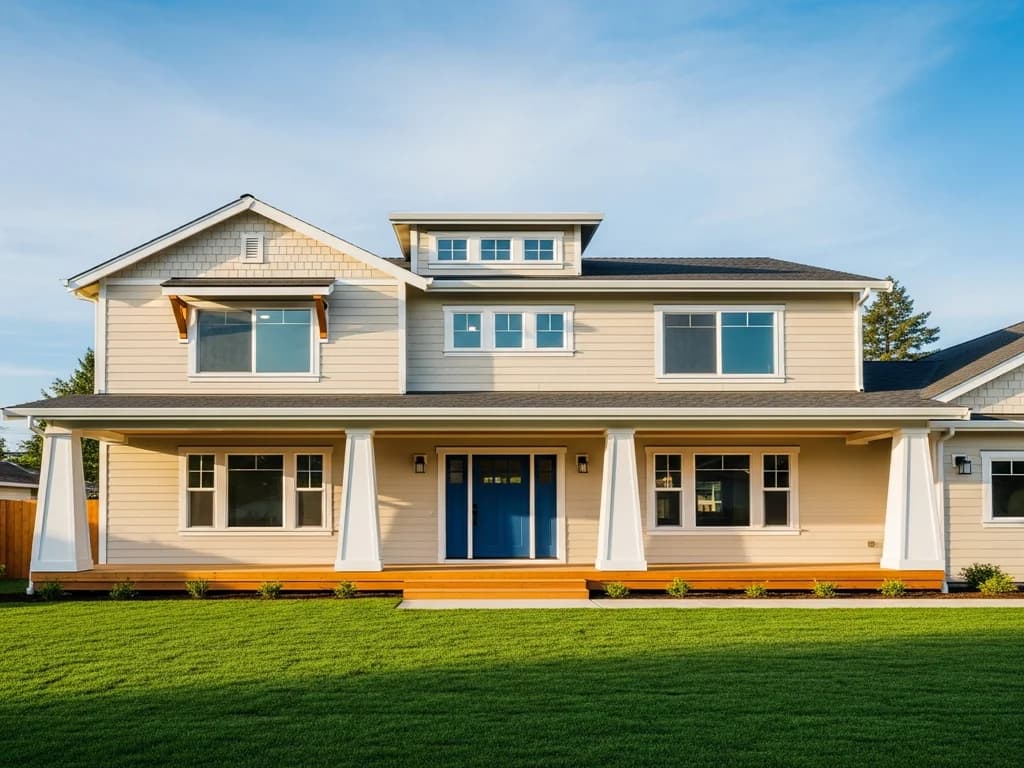
Window Replacement in Soda Springs
Windows at Soda Springs face a combination almost nowhere else in our service area produces: a long, genuinely cold heating season at 6,800 to 7,200 feet, drifted snow sitting against lower openings for weeks, meltwater and ice working at the flashing, and a short but intense high-altitude summer. On top of that, most of these buildings are second homes, so a failing unit goes unreported.
The result is that both label numbers matter here, which is not true in most of California — and that the flashing around the opening matters more than the unit going into it.
U-factor leads at this elevation, which reverses the usual advice
Most Northern California window guidance leads with solar heat gain coefficient, because summer cooling load dominates in the valley. At Donner Summit the priority inverts: the heating season is long and genuinely cold, so U-factor — how readily heat escapes through the whole assembly — is the number that governs comfort and running cost. Frame material carries more weight here too, since a poorly insulated frame conducts heat out all winter regardless of the glass. Solar heat gain still applies on sun-facing elevations during the short summer, but for most summit properties it is the secondary consideration.
Snow against the opening is a specific failure mode
Drifted snow can sit against a lower window for weeks, which is a load and an exposure that valley details never contend with. It puts sustained moisture against the sill and frame, it can bear against the unit itself, and when it melts the water goes wherever the flashing lets it. The practical consequences are that sill pans matter enormously, that clearances have to account for snow depth rather than grade, and that the lower openings on a summit building deserve more scrutiny during inspection than any other part of the glazing. On a second home, a sill that has been wet for two months is discovered in spring, if at all.
Failed seals and what altitude does to them
Insulated glass units are sealed assemblies containing gas at a pressure set at the factory, and altitude plus a wide temperature swing works them harder than a mild climate does. The visible symptom of a failed seal is fog or haze between the panes that no cleaning touches — at which point the insulating gas is gone and the unit performs closer to single glazing regardless of appearance. Repair services exist that clear the appearance, but they do not restore the thermal performance, and on a property where heating cost is the complaint that distinction is the whole point. Exposure varies enough between elevations on forested summit lots that finding one side failed and another serviceable is normal, and phasing by elevation is a reasonable response.
The opening, and why it outranks the unit
A sill pan beneath the window catches and drains anything that gets past it; head flashing above directs water out over the unit onto the face of the cladding; and both have to lap correctly against the wall's weather barrier in the right sequence. On older summit construction those details are frequently minimal or absent, and meltwater will find every one of the gaps. A replacement that installs a better unit into an unimproved opening has upgraded the thermal performance and left the water problem exactly where it was — which is why a window that starts leaking after replacement is nearly always reporting a flashing error rather than a defective product. If siding is coming off anyway, that is the affordable moment to rebuild the openings properly.
Why this matters in Soda Springs
- Specified for Donner Summit / Sierra Alpine conditions
- non-combustible fiber cement rated for extreme snow load as the recommended system
- Correctly detailed weather-resistive barrier and flashing
- Installed by a crew with 20 years combined experience
Recommended systems for Soda Springs
- non-combustible fiber cement rated for extreme snow load
- snow-depth grade clearances and meltwater flashing
- freeze-thaw-tolerant gapped and back-primed joints
- stainless or coated fasteners for high cycle counts
Window Replacement for Soda Springs homes
The full window replacement approach — materials, weather-resistive detailing, and the manufacturer standards we install to — is covered on the main service page, then specified for Soda Springs's conditions on this one.
Our Soda Springs process
- Step 1
Consultation
We listen to your goals and assess your home on site — exposure, substrate, and architecture.
- Step 2
Design & Proposal
A clear written proposal with the right system specified for your climate and a transparent scope.
- Step 3
Expert Installation
Trained crews install to manufacturer best practices with careful weather-management detailing.
- Step 4
Walkthrough & Support
A final walkthrough, full cleanup, and a clear written record of the scope completed — work we stand behind.
FAQ
Window Replacement in Soda Springs — FAQ
U-factor, which reverses the usual California advice. The heating season here is long and genuinely cold, so the rate at which heat escapes through the whole assembly governs comfort and running cost. Frame material matters more than usual too. Solar heat gain still applies on sun-facing walls in the short summer, but it is secondary.
Not in any way that restores performance. Fog means the seal has failed and the insulating gas is gone, so the unit is performing closer to single glazing. Services exist that clear the appearance but the thermal loss remains. If heating cost is what prompted the question, replacing the failed units is the actual fix.
It can, and it is a genuinely summit-specific problem. Drifted snow holds sustained moisture against the sill and frame for weeks, can bear against the unit, and delivers water into whatever the flashing lets through when it melts. Sill pans and snow-depth clearances are the answers, and lower openings deserve the most scrutiny on a summit inspection.
No. On forested summit lots the sun and weather exposure varies enough between elevations that one side is commonly failed while another is still serviceable, so phasing by elevation is sensible. The exception is if cladding is coming off — then doing the openings on that elevation together is far cheaper than returning later.
Keep Exploring
More for Soda Springs homeowners
More in Soda Springs
Other exterior services in Soda Springs
Helpful Exterior Guides