
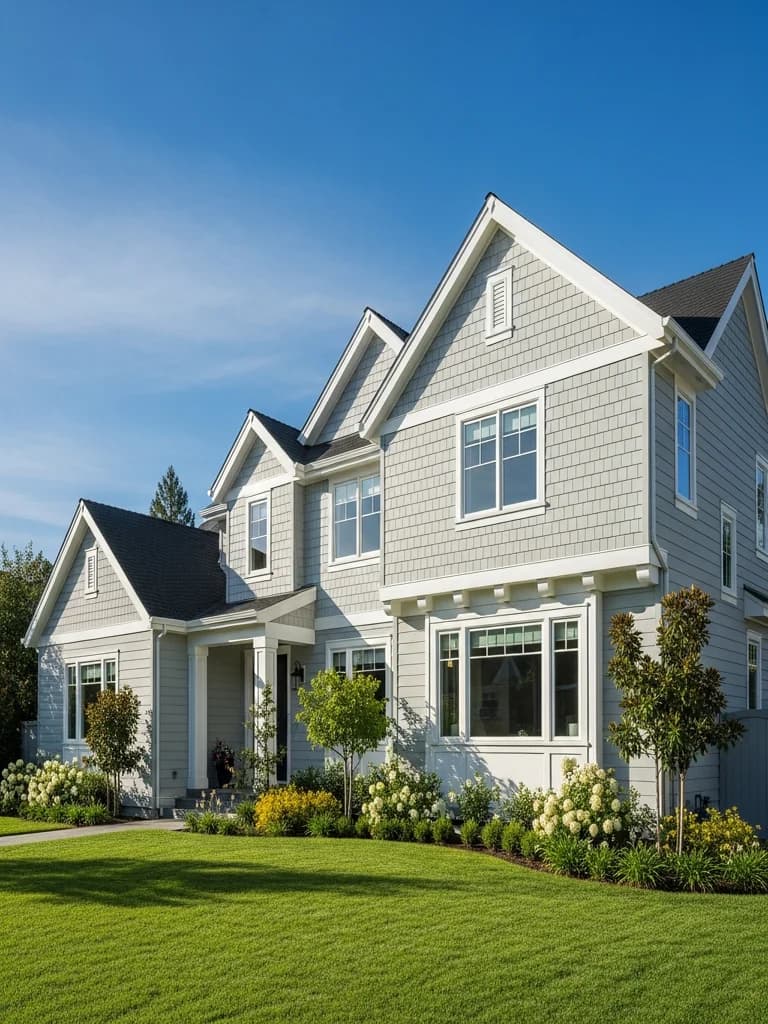
Exterior work in Dutch Flat
Dutch Flat is an unincorporated census-designated place in Placer County, just below I-80 between Alta and Gold Run. The town is California Historical Landmark No. 397, and the Dutch Flat Historic District has been on the National Register of Historic Places since 1973. The 2020 Census counted 183 residents and 127 housing units, about a quarter of them held for seasonal use. The American Community Survey's estimate of the median build year is around 1942, by far the oldest of any community on this stretch of I-80. An exterior project here starts from age and history, not from a tract-home template.
Old walls, real fire exposure
Those older buildings sit in pine and oak forest that CAL FIRE maps as Very High, and almost every one was built long before anyone thought about embers. Wood siding, open eaves, unscreened attic and foundation vents, and wood porches against the wall are the original fabric of the town. They are also exactly where a house catches fire. The work is in reconciling those two facts carefully.
Considering an exterior project in Dutch Flat?
Dutch Flat housing and architecture
The historic core is a compact grid of 19th-century houses, false-front and masonry commercial buildings, and small cottages, with later cabins and homes spreading up the slopes. The typical house is clad in narrow wood lap or drop siding with simple corner boards and window casings, and the proportions of those details are what give the street its character. Many have been patched over generations with mismatched boards and wood of different ages. Opening a wall here often finds board sheathing rather than plywood, no weather barrier at all, and framing that is out of plumb, so we plan for a careful strip and an honest condition report before final scope.
Climate on the Dutch Flat slope
At about 3,100 feet, Dutch Flat gets wet winters with periodic snow and freeze-thaw, then long dry summers. NOAA's 1991-2020 normals for the nearby Gold Run 2 SW station show about 54 inches of precipitation a year. Old houses with no weather barrier take that water straight into the sheathing, which is why rot at sills, window bottoms, and porch connections is so common here. For fiber cement, Dutch Flat's 95714 ZIP isn't on the California list in Hardie's published HZ10 warranty coverage, so the HZ5 freeze-thaw line is the right spec. Confirm the zone at order time. Our HZ10 vs HZ5 guide explains the difference.
Wildfire exposure in Dutch Flat
The CAL FIRE State Responsibility Area map returns Very High at Dutch Flat's mapped community point. Confirm your own lot on the OSFM Fire Hazard Severity Zone viewer. CAL FIRE is responsible for wildland fire across the SRA, and local response involves the Placer County Fire Department, so check which station covers your address. On a historic house, the biggest gains usually don't come from the cladding face. They come from screening or replacing vents, closing open eaves, and making porches and their connections less likely to hold embers against the wall. Our fire-resistant exteriors guide covers each item.
Recommended materials for Dutch Flat
Smooth-finish HZ5 James Hardie lap in a narrow reveal, with trim sized to match the original casings and corner boards, can reproduce the look of a period elevation while removing combustible cladding from the wall. On a building where the original wood is sound and historically significant, keeping and repairing it can be the better call, and we will say so. In that case the fire work shifts to vents, eaves, and the base of the wall. Our historic preservation guide discusses that trade-off for Gold Country towns.
What drives cost in Dutch Flat
The age of the building drives cost more than its size. Board sheathing, missing weather barrier, out-of-plumb walls, and old repairs all add labour, and they show up only after the strip. Matching historic trim proportions takes more carpentry than a standard trim package. We give a named hidden-damage allowance and a condition report with photos, so decisions are made on what the wall actually shows. See why siding estimates vary.
Historic district and permits
Dutch Flat is unincorporated, so building permits and planning go through Placer County. Because the town is a National Register historic district, ask county planning early whether your parcel carries any design or historic review requirement before you commit to a profile or colour. We'd rather confirm that than assume.
Our process in Dutch Flat
- Step 1
Consultation
We listen to your goals and assess your home on site — exposure, substrate, and architecture.
- Step 2
Design & Proposal
A clear written proposal with the right system specified for your climate and a transparent scope.
- Step 3
Expert Installation
Trained crews install to manufacturer best practices with careful weather-management detailing.
- Step 4
Walkthrough & Support
A final walkthrough, full cleanup, and a clear written record of the scope completed — work we stand behind.
Dutch Flat needs exteriors that respect a 19th-century streetscape and still stand up to modern fire exposure. We scope each building from what we find in the wall, keep period proportions, and harden the vents, eaves, and base of the wall where it matters most.
FAQ
Dutch Flat — Common Questions
Usually, yes. Smooth narrow-reveal fiber cement with trim sized to the original casings reads as period siding from the street. Where the original wood is sound and significant, repairing it can be the better choice, with hardening at vents and eaves instead.
Dutch Flat is a National Register historic district in unincorporated Placer County. Ask county planning whether your parcel carries any design or historic review requirement before choosing materials. We confirm it before ordering.
HZ5, the freeze-thaw line. The 95714 ZIP isn't on the California list in Hardie's HZ10 warranty coverage. Confirm on Hardie's ZIP lookup at order time.
Board sheathing, little or no weather barrier, rot at sills, window bottoms, and porch connections, and generations of patch repairs. We document it with photos before final scope.
Helpful Exterior Guides