
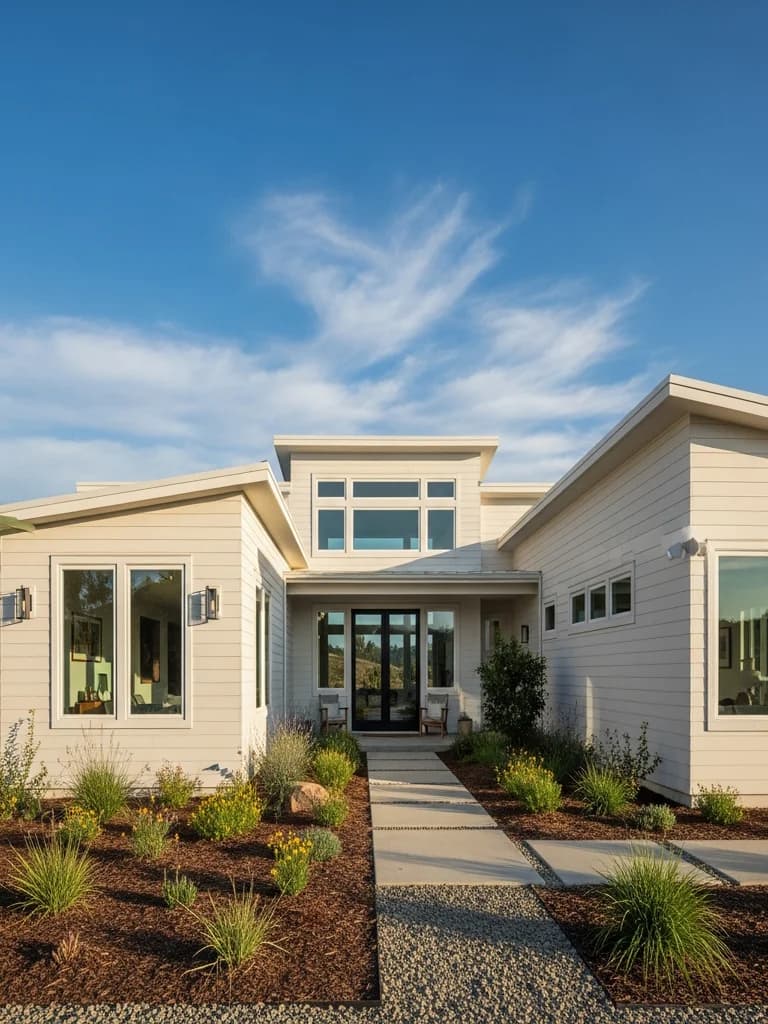
Siding Repair in Emigrant Gap
At Emigrant Gap, most siding damage is found in spring. The 2020 Census found just 34 of 109 homes occupied in the 95715 ZIP area, which takes in Blue Canyon too, and 68 set aside for seasonal or recreational use. A cabin can take a full winter of snow against its walls and meltwater behind its trim with nobody there, and the owner first sees the damage when they come back after the thaw.
At about 5,200 feet, Emigrant Gap is where snow becomes a regular part of every winter on I-80. The cabins here are mostly older wood-sided or T1-11 structures with low clearance to the ground and roof-to-wall corners that have no flashing designed for snowmelt. A repair has to fix both the damage and the reason it happened. Our [repair service page](/siding-repair) has the overview.
Free estimate
Get your free Emigrant Gap estimate
On-site assessment with a written, itemized scope. We reply within one business day.
Licensed, Bonded & Insured
A post-thaw walk-around on a seasonal cabin
The first visit after snowmelt is the right time to look for winter damage. We walk the full exterior and check the bottom courses for swelling and rot, the walls below roof edges and valleys for staining, the corners and butt joints for freeze damage, and decks and railings for impact. We probe soft spots to see how far the damage runs. That gives a complete list of what the winter did, so repairs can be scheduled and done well before the next snow arrives. If you can't be there, we send photos and a written list.
Snow piled against low-clearance cabin walls
Weeks of snow banked against the lower wall keep the bottom courses wet at temperatures where nothing dries. On older Emigrant Gap cabins built with siding close to the ground, those courses rot first. We cut out the damaged boards, check the sill plate and sheathing, and install the new bottom course well above grade for real snow depth rather than a valley-standard gap. The mountain cabin snow damage guide maps the usual failure points. Where the cabin sits in a spot that drifts deep, we discuss whether a non-combustible lower band makes sense, since it also helps with the summer fire exposure CAL FIRE maps here.
Meltwater at roof-to-wall junctions
Where a lower roof meets a wall, meltwater from the snowpack runs down the junction and, without a kickout flashing, straight behind the siding. The result is a vertical streak of rot below the roof edge that often extends into the sheathing. We remove the damaged siding, repair the substrate, install step and kickout flashing lapped correctly into the weather barrier, and reinstall. Our kickout flashing guide explains why that small piece matters so much. On cabins with a deck below the roof edge, the same water also reaches the ledger, so we check it at the same time.
Cold hollows that freeze more often than the ridge
Freezing-night counts in NOAA's 1991-2020 normals swing widely over short distances: roughly 170 a year at Lake Spaulding, about 5,160 feet and two miles or so to the north, against roughly 79 at the Blue Canyon airport up on the ridge. A cabin down in a hollow may see more than twice as many freeze-thaw cycles as one on the ridge, so its joints and board ends wear faster. When we repair those walls, we seal and prime every cut end, gap joints correctly, and use HZ5 fiber cement for the 95715 ZIP where boards are replaced with fiber cement.
Finishing repairs before the first storms
A half-repaired wall won't survive a winter here. We schedule repairs within the mountain building season and sequence them so the wall is weather-tight before the season's first big storm. If damage is widespread, it may make more sense to re-side than to patch. Our repair or replace guide explains the decision. When a cabin has damage on most of its walls, patching each one in a short season can cost more time than a planned re-side the following summer. Emigrant Gap is in James Hardie's HZ5 zone, so new fiber cement is the freeze-thaw line. For what moves the price of a smaller cabin job, see the repair cost guide.
Why this matters in Emigrant Gap
- Specified for I-80 Corridor / Sierra Alpine conditions
- James Hardie fiber cement (HZ5 line) as the recommended system
- Correctly detailed weather-resistive barrier and flashing
- Installed by a crew with 20 years combined experience
Recommended systems for Emigrant Gap
- James Hardie fiber cement (HZ5 line)
- snow-depth grade clearances
- roof-to-wall and deck-ledger flashing for meltwater
- ember-resistant vents and enclosed eaves
Siding Repair for Emigrant Gap homes
The full siding repair approach — materials, weather-resistive detailing, and the manufacturer standards we install to — is covered on the main service page, then specified for Emigrant Gap's conditions on this one.
Our Emigrant Gap process
- Step 1
Consultation
We listen to your goals and assess your home on site — exposure, substrate, and architecture.
- Step 2
Design & Proposal
A clear written proposal with the right system specified for your climate and a transparent scope.
- Step 3
Expert Installation
Trained crews install to manufacturer best practices with careful weather-management detailing.
- Step 4
Walkthrough & Support
A final walkthrough, full cleanup, and a clear written record of the scope completed — work we stand behind.
FAQ
Siding Repair in Emigrant Gap — FAQ
As soon as the snow clears enough to see the walls. That leaves time to finish before the next winter.
Snow sits against the lowest courses for weeks and roof meltwater soaks the same area. Raising the bottom course and flashing roof-to-wall junctions addresses the cause.
CAL FIRE rates the mapped community point Very High. Your lot's own rating is on the OSFM viewer.
Yes. After the walk-around we send photos and a written scope. Our small siding repair cost guide explains what drives the figure on a snow-country cabin.
Keep Exploring
More for Emigrant Gap homeowners
More in Emigrant Gap
Other exterior services in Emigrant Gap
Nearby Service Areas
Siding Repair near Emigrant Gap
Helpful Exterior Guides