
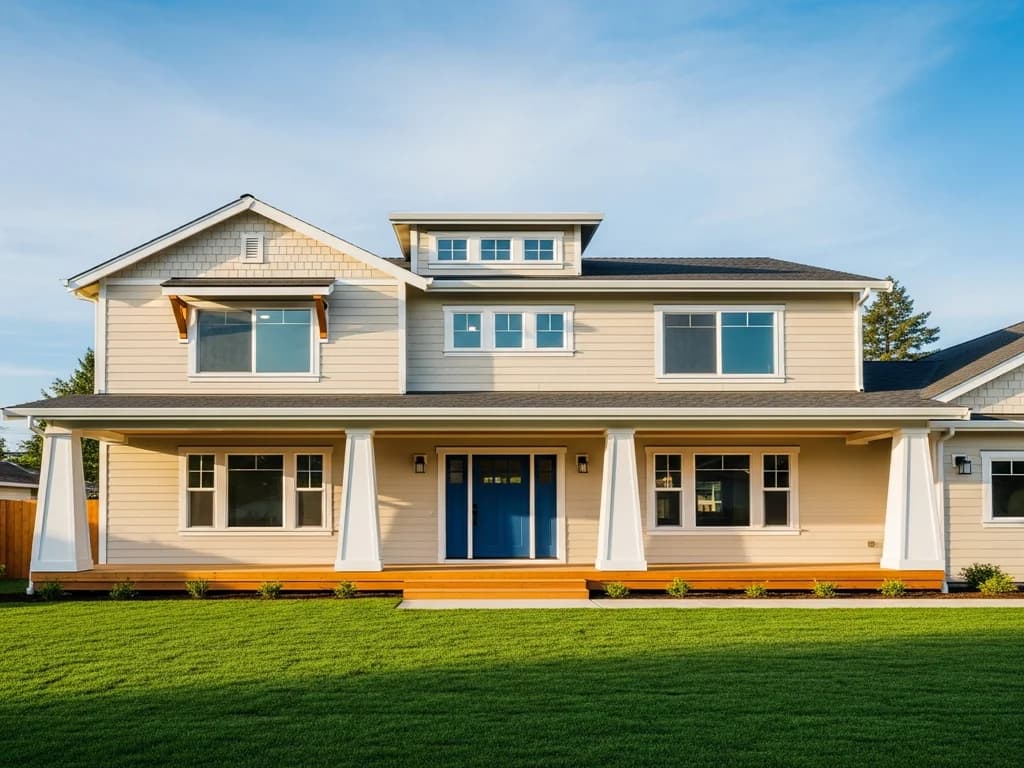
Fiber Cement Siding in Homewood
The West Shore is the oldest-feeling part of Lake Tahoe, and Homewood's housing carries genuine period character alongside genuine period construction. On buildings of this age the question is rarely which cladding — it is what has been happening behind the existing one for the last several decades.
Fiber cement handles the snow and the fire exposure. Whether it can preserve the character is a matter of specifying profile and proportion deliberately rather than defaulting.
Historic fabric, and reproducing it honestly
West Shore cabins and lodge-era buildings depend on narrow board widths, specific reveals, and trim proportions that belong to their period — get those wrong and a modern wide-lap product misrepresents the building even if the color is right. Fiber cement reproduces the vernacular convincingly when those variables are specified rather than defaulted, so hardening a historic Homewood building does not require erasing it. The design work is where the effort goes; the substrate decision is comparatively simple once the appearance is settled. Where a property carries genuine historic significance there may be review considerations beyond a standard permit, which is a question for the county and any applicable body.
Snow shed with nowhere good to land
This is the West Shore's distinctive problem. The housing occupies a narrow band between the mountain rising behind and the lake immediately in front, on frequently tight lots, and snow releasing off a steep roof carries real mass. Where it lands on walls, trim, railings, or anything projecting from the building it does mechanical damage — cracked trim, split boards, torn flashing. On these lots there is often nowhere for it to go that is not something. Snow retention on the roof, or deliberately directing the shed, is a live design question here rather than an afterthought, and replacing damaged trim without addressing it simply schedules the next round.
Decades of meltwater behind the boards
Buildings of this age generally predate modern water-management practice, and on the West Shore they have been absorbing snowmelt for a long time. Expect torn or absent weather-resistive barrier, missing flashing at roof-to-wall junctions and above openings, and rot in trim, sheathing, or occasionally framing. None of it is knowable until a section is opened, which is why a credible Homewood proposal carries a named allowance rather than a fixed price — and why the substrate is frequently the larger half of the project. A re-side that replaces only the visible material has addressed the smaller problem.
TRPA, and the color constraint on a historic building
Homewood is inside the Tahoe basin, so exterior work answers to TRPA alongside Placer County. Current guidance calls for subdued earth and wood tones, medium to dark in value, on structures TRPA considers visible — which on a Highway 89 frontage or a lakefront parcel is most of them. On a historic building that constraint usually aligns with what the architecture wants anyway, since the period palette here was never bright. Where it can bite is on a specific heritage color outside the permitted range, which is worth establishing before design rather than at submittal.
Why this matters in Homewood
- Specified for West Shore Lake Tahoe conditions
- non-combustible fiber cement as the recommended system
- Correctly detailed weather-resistive barrier and flashing
- Installed by a crew with 20 years combined experience
Recommended systems for Homewood
- non-combustible fiber cement
- TRPA-compliant subdued earth and wood tone finishes
- snow-rated clearances and meltwater flashing
- period-sensitive profiles on historic stock
Fiber Cement Siding for Homewood homes
The full fiber cement siding approach — materials, weather-resistive detailing, and the manufacturer standards we install to — is covered on the main service page, then specified for Homewood's conditions on this one.
Our Homewood process
- Step 1
Consultation
We listen to your goals and assess your home on site — exposure, substrate, and architecture.
- Step 2
Design & Proposal
A clear written proposal with the right system specified for your climate and a transparent scope.
- Step 3
Expert Installation
Trained crews install to manufacturer best practices with careful weather-management detailing.
- Step 4
Walkthrough & Support
A final walkthrough, full cleanup, and a clear written record of the scope completed — work we stand behind.
FAQ
Fiber Cement Siding in Homewood — FAQ
Generally yes, if board width, reveal, and trim proportion are specified deliberately rather than defaulted. Those variables decide whether a period elevation reads correctly far more than the material does. The design work is most of the job; the substrate decision is comparatively simple once the appearance is settled.
Because the housing sits in a narrow band between the mountain and the lake on frequently tight lots, and snow off a steep roof carries real mass with often nowhere to land that is not something. It does mechanical damage — cracked trim, split boards, torn flashing — that gets misdiagnosed as poor material quality. Snow retention or directing the shed is a design question here.
Because West Shore stock of this age generally predates modern water-management practice and has been absorbing snowmelt for decades. The condition of the weather barrier, flashing, and framing is not knowable until a section is opened, and on this stock the substrate is frequently the larger half of the project.
It applies the same way — subdued earth and wood tones, medium to dark, on structures it considers visible, which on Highway 89 frontage or a lakefront parcel is most of them. On a historic building that usually aligns with what the architecture wants, since the period palette was never bright. Where it can bite is a specific heritage color outside the range.
Keep Exploring
More for Homewood homeowners
More in Homewood
Other exterior services in Homewood
Nearby Service Areas
Fiber Cement Siding near Homewood
Helpful Exterior Guides