
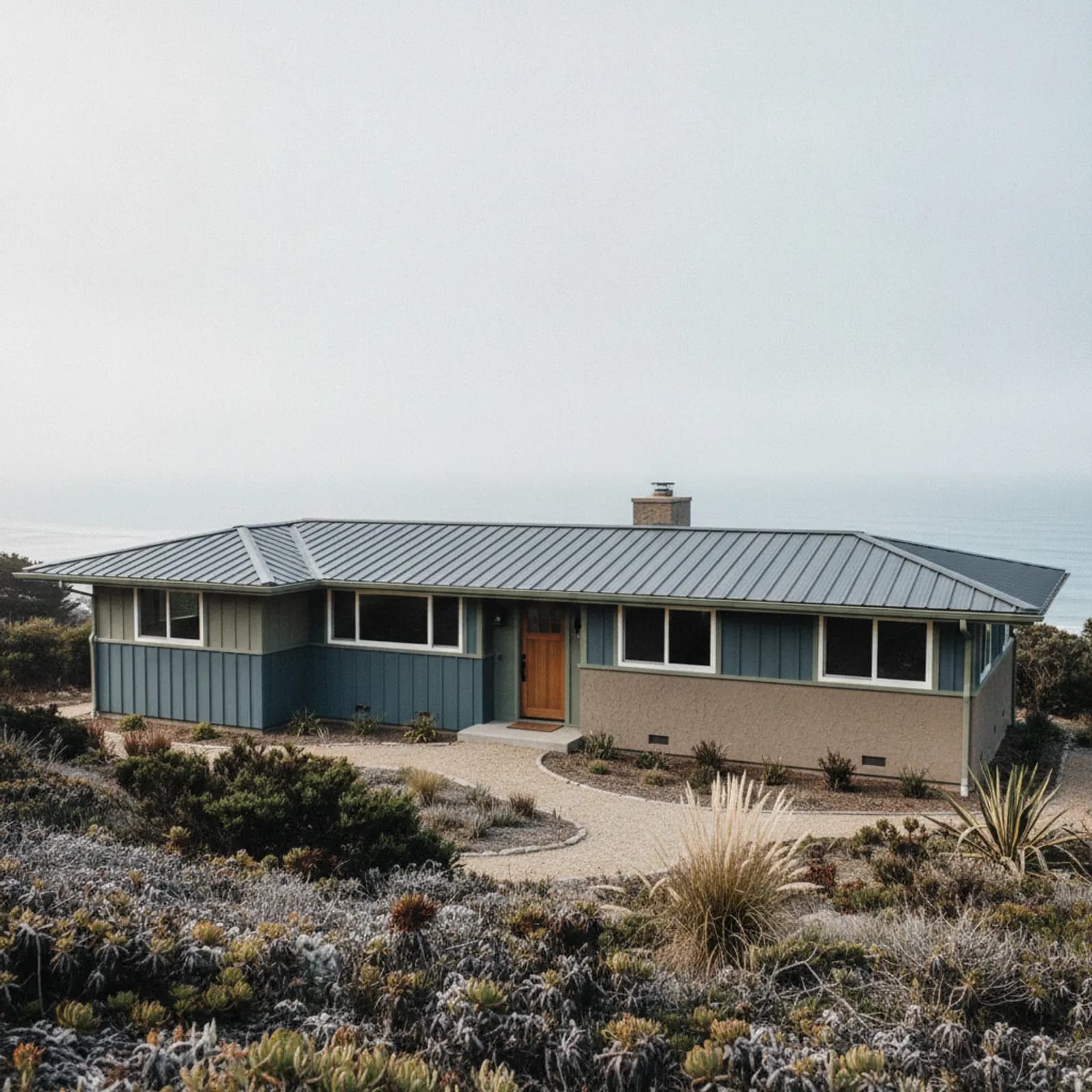
Fire-Resistant Siding in Live Oak
Live Oak's wildfire exposure is moderate and it is a grass-edge condition rather than a town-wide one, so the useful conversation here is about scoping rather than about maximum hardening.
Orchard country also has a particular feature worth understanding: the land use around a property changes what is actually burnable near it.
Irrigated orchard is not the same fuel as dry grass
An important local distinction: actively irrigated tree crops are not the fuel load that cured annual grassland is. A property surrounded by working, watered orchard is in a genuinely different position from one backing onto dry rangeland or a fallow field, and that difference is often more relevant than distance from town. What does carry fire in this landscape is the dry margins — roadsides, ditch banks, fence lines, fallow ground and field edges left to cure. So the exposure question here is less about how rural a property is and more about what specifically lies immediately around it.
Where grass exposure applies, the priorities are ground-level
On parcels that do back onto cured grass, the mechanism is a fast, wind-driven, relatively brief fire that throws a heavy load of short-lived embers. Buildings engage with that at ground level: the base of the wall, the transition to grade, stored material against the structure, and debris in gutters and at the foundation. Clearance and fuel management timed to the season is the highest-value response, followed by ember-resistant vents, and then the ground transition. Non-combustible cladding is worth having on those parcels and it is not usually the item that changes the outcome first.
Agricultural ignition and where fires actually start
In farming country a meaningful share of ignitions come from ordinary activity rather than from wildland: equipment operating in dry conditions, hot exhausts in cured vegetation along field margins, and roadside starts along Highway 99 and the county roads. That reshapes the risk map in a way worth knowing. A property fronting a busy road or bordering a fallow field can carry more real exposure than one further out but surrounded by irrigated ground, which is not the intuition most people start from.
What Sutter County determines
Fire hazard severity zone designation, defensible space requirements and any local amendments applying to a specific parcel are determinations Sutter County and the state make rather than a contractor. Because the exposure here varies so much parcel by parcel depending on what surrounds it, that confirmation is genuinely worth getting rather than inferring from the town. Anyone stating your obligations with confidence without checking is guessing on your behalf, and on a moderate-exposure parcel that guess frequently runs expensive.
Why this matters in Live Oak
- Specified for Sacramento Valley conditions
- James Hardie fiber cement as the recommended system
- Correctly detailed weather-resistive barrier and flashing
- Installed by a crew with 20 years combined experience
Recommended systems for Live Oak
- James Hardie fiber cement
- fire-aware detailing on the rural grass edge
- factory finishes
- durable trim packages
Fire-Resistant Siding for Live Oak homes
The full fire-resistant siding approach — materials, weather-resistive detailing, and the manufacturer standards we install to — is covered on the main service page, then specified for Live Oak's conditions on this one.
Our Live Oak process
- Step 1
Consultation
We listen to your goals and assess your home on site — exposure, substrate, and architecture.
- Step 2
Design & Proposal
A clear written proposal with the right system specified for your climate and a transparent scope.
- Step 3
Expert Installation
Trained crews install to manufacturer best practices with careful weather-management detailing.
- Step 4
Walkthrough & Support
A final walkthrough, full cleanup, and a clear written record of the scope completed — work we stand behind.
FAQ
Fire-Resistant Siding in Live Oak — FAQ
Actively irrigated tree crops are genuinely not the fuel load that cured annual grassland is, so a property ringed by working, watered orchard is in a different position from one backing dry rangeland. What carries fire here is the dry margins — roadsides, ditch banks, fence lines, fallow ground and field edges left to cure.
Ground-level work first. Grass fire is fast, wind-driven and brief, throwing short-lived embers, and buildings engage with it at the base of the wall, the transition to grade, stored material against the structure and debris at the foundation. Seasonal clearance is the highest-value response, then ember-resistant vents, then the ground transition.
Often from ordinary agricultural and roadside activity — equipment in dry conditions, hot exhausts in cured vegetation along field margins, roadside starts along Highway 99 and county roads. That means a property fronting a busy road or bordering a fallow field can carry more real exposure than one further out but ringed by irrigated ground.
From Sutter County and the state. Exposure here varies substantially parcel by parcel depending on what surrounds it, so confirmation is worth getting rather than inferring from the town. Anyone stating your obligations confidently without checking is guessing — and on a moderate-exposure parcel that guess tends to run expensive.
Keep Exploring
More for Live Oak homeowners
More in Live Oak
Other exterior services in Live Oak
Nearby Service Areas
Fire-Resistant Siding near Live Oak
Helpful Exterior Guides