
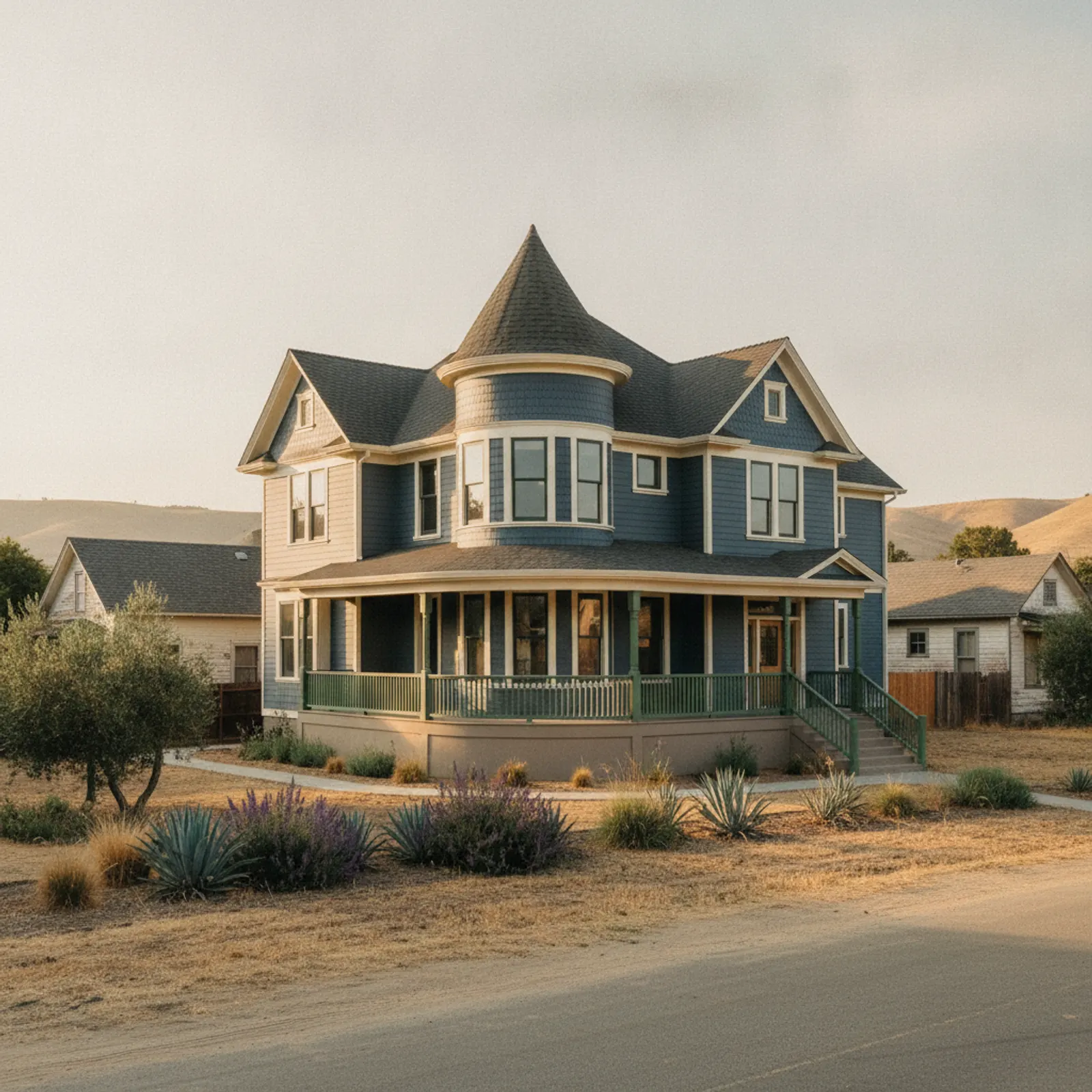
Exterior renovation in Knights Landing
Knights Landing is a small, historic farming town on the Sacramento River north of Woodland, one of the oldest river crossings in the county and still very much an agricultural community. Its housing runs to older river-town homes and a few Victorians near the original townsite, farmhouses and ag homes among the surrounding row crops, post-war and mid-century cottages, and modest rural-edge homes. Much of this stock wears cladding that decades of valley sun have aged, but Knights Landing's defining trait is its position on a low bend of the Sacramento River, where flood history and river moisture make detailing as important as the material on the wall.
Valley sun on a flood-prone river bend
Knights Landing's exterior reality is heat and river moisture together. The long, bright valley summer chalks and cups original cladding on the older river-town homes and farmhouses, worst on south and west walls, the same end-of-life pattern seen across Yolo County. What sets the town apart is its low position on the river — Knights Landing sits on a flood-prone bend where high water and persistent river-corridor humidity raise moisture exposure to a steady moderate level. Fade-resistant fiber cement still leads, but the bottom-course and drainage-plane detailing around it has to account for that flood-and-moisture history.
Considering an exterior project in Knights Landing?
Knights Landing housing and architecture
Knights Landing's stock reflects its long history as a river crossing and farm town: older river-town homes and a handful of Victorians near the original townsite, farmhouses and agricultural homes on the surrounding parcels, post-war and mid-century cottages, and modest rural-edge homes. The older homes and Victorians reward narrow, period-sensitive profiles and accurate trim where they survive, while the farmhouses and cottages suit clean, honest lap profiles and durable trim. Across all of them, the low river position means how high and how exposed a home sits relative to flood elevation shapes the detailing as much as the architecture does. We design to both the era and the parcel's position on the bend.
Built for Knights Landing's heat and river moisture
Knights Landing behaves as valley-heat country first: long, intense, high-UV summers fade finishes and stress joints worst on south and west elevations, making fade-resistant factory-finished fiber cement and heat-aware gapping and fastening the baseline. What distinguishes the town within Yolo County is the river. Knights Landing sits low on a flood-prone bend of the Sacramento River, where high-water history and river-corridor humidity hold moisture exposure at a steady moderate level. The same wall has to beat the sun and, on these low river-adjacent parcels, also manage moisture and recover well from seasonal high water through careful bottom-course clearances and a continuous, well-lapped drainage plane.
Recommended materials for Knights Landing
James Hardie fiber cement with a factory finish is the core recommendation for Knights Landing: dimensionally stable in valley heat, color-stable under UV, and well suited to a flood-prone river setting when it is paired with the right detailing. Fiber cement tolerates incidental moisture far better than original wood or economy cladding, which matters on a river bend with a flood history. The factory finish resists the chalking and fade the valley sun drives, while a continuous weather-resistive barrier, flashed penetrations, kickout flashings, and generous bottom-course clearances handle the river moisture. The same product line carries the older river homes and the surrounding farmhouses alike.
What an exterior project costs in Knights Landing
Knights Landing pricing follows the usual drivers — home size and stories, trim and profile complexity, substrate and dry-rot condition once cladding is removed, window integration, and the weather-management scope. The variable specific to Knights Landing is moisture- and flood-aware detailing, which is heaviest on the low river-adjacent homes near the bend and lighter on higher parcels set back from the water. The town's older homes are also the most likely to reveal dry rot or flood-related substrate damage at demolition. Rural access on ag parcels can affect staging. We provide a written, scoped estimate after an on-site assessment rather than a generic per-foot figure.
The historic townsite on the river bend
Knights Landing's original townsite sits right on the low river bend, holding the town's oldest homes and surviving Victorians. These are the most flood- and moisture-exposed parcels in the community, so we pair period-sensitive profiles with the heaviest drainage-plane and bottom-course detailing — flashing laps, kickout flashings, and generous clearances — and inspect closely for the dry rot and flood-related substrate damage decades on the river can leave. Getting both the character and the moisture detailing right is what protects these older homes.
Surrounding farms and ag homes
Beyond the townsite, Knights Landing's parcels run to farmhouses and agricultural homes among the row crops north of Woodland. These homes suit clean, durable lap profiles and a heat-stable, fade-resistant finish, and their more set-back positions usually ease the flood-and-moisture picture relative to the river-bend core. Access can be longer on ag parcels, which we plan for in the on-site walk so the crew stages the work efficiently across a rural property.
A small market where durability is the point
Knights Landing is a small, modest market where exterior decisions are practical ones — protection and longevity matter more than trend. A re-side that pairs heat-stable, moisture-tolerant fiber cement with proper flood-aware detailing is the highest-value move for most homes here, putting a genuinely durable system on walls that were never specified for either the valley sun or the river's moisture. We keep records of the materials and assemblies used so the detailing is documented for the long run.
Yolo County, Knights Landing CSD, and Knights Landing Fire
Working exteriors in Knights Landing coordinates with a few local authorities. Knights Landing is unincorporated Yolo County — there is no city government, so building permits come through the Yolo County Department of Community Services rather than a municipal department. Electric and gas are PG&E. Water is supplied by the Knights Landing Community Services District (a small local district serving the townsite); private wells serve rural acreage. Fire response is the Knights Landing Fire Protection District alongside Yolo County Fire on regional events. The Sacramento River levee system, maintained by Reclamation District 108 and the U.S. Army Corps of Engineers, is central to how Knights Landing sits — flood management is a real ongoing consideration.
HZ10 climate on Knights Landing's river-bend setting
Knights Landing is in James Hardie's HZ10 climate zone; installing HZ5 is a documented warranty misapplication. On the fire side, essentially all of Knights Landing sits in Low or unmapped FHSZ territory under California's 2025 LRA Fire Hazard Severity Zone map — this is levee-protected valley-floor river-town ground, and wildland fire is not the local threat. FEMA flood-hazard zoning applies to low river-bend parcels — that framework, not fire code, drives most exterior scope here. Chapter 7A moved into the standalone WUI Code on January 1, 2026, but does not typically drive Knights Landing's spec.
Our process in Knights Landing
- Step 1
Consultation
We listen to your goals and assess your home on site — exposure, substrate, and architecture.
- Step 2
Design & Proposal
A clear written proposal with the right system specified for your climate and a transparent scope.
- Step 3
Expert Installation
Trained crews install to manufacturer best practices with careful weather-management detailing.
- Step 4
Walkthrough & Support
A final walkthrough, full cleanup, and a clear written record of the scope completed — work we stand behind.
Knights Landing rewards an exterior strategy that respects both the valley sun and its flood-prone river setting, from an older home on the historic bend to a farmhouse out among the crops. We scope every Knights Landing project on site so the heat and moisture detailing match the actual parcel, and your written estimate governs the work.
FAQ
Knights Landing — Common Questions
Fiber cement with a factory fade-resistant finish — it handles the valley heat and, with correct detailing, tolerates the river-corridor moisture and flood exposure on this low bend of the Sacramento River far better than original wood or economy cladding.
Yes — homes low on the bend get extra attention to weather-resistive barrier, flashing, kickout flashings, and generous bottom-course clearances because of the flood history and steady river moisture.
Low — Knights Landing is a low-lying river-ag town, not a wildland-edge community. Non-combustible fiber cement remains a sound, low-regret choice alongside its heat and moisture performance.
Original cladding was never specified for the valley UV load, and the river moisture accelerates failure on low-lying walls. Chalking, cupping, and fading on sun-facing elevations, sometimes with damage near the base, is the typical pattern.
Yes. We use narrow, period-appropriate profiles and accurate trim so durability is upgraded without erasing character, paired with the heavier moisture detailing the river bend requires.
When feasible, yes — combining them ensures correct flashing integration and avoids duplicated trim work, which matters more on the moisture- and flood-exposed river homes.
Yes — the historic townsite on the river bend, the surrounding farmhouses and ag homes, and the modest rural-edge homes north of Woodland.
A correctly installed fiber cement system commonly performs 30+ years in the valley climate, with factory finishes and proper moisture detailing extending the time before any cosmetic refresh.
Helpful Exterior Guides