
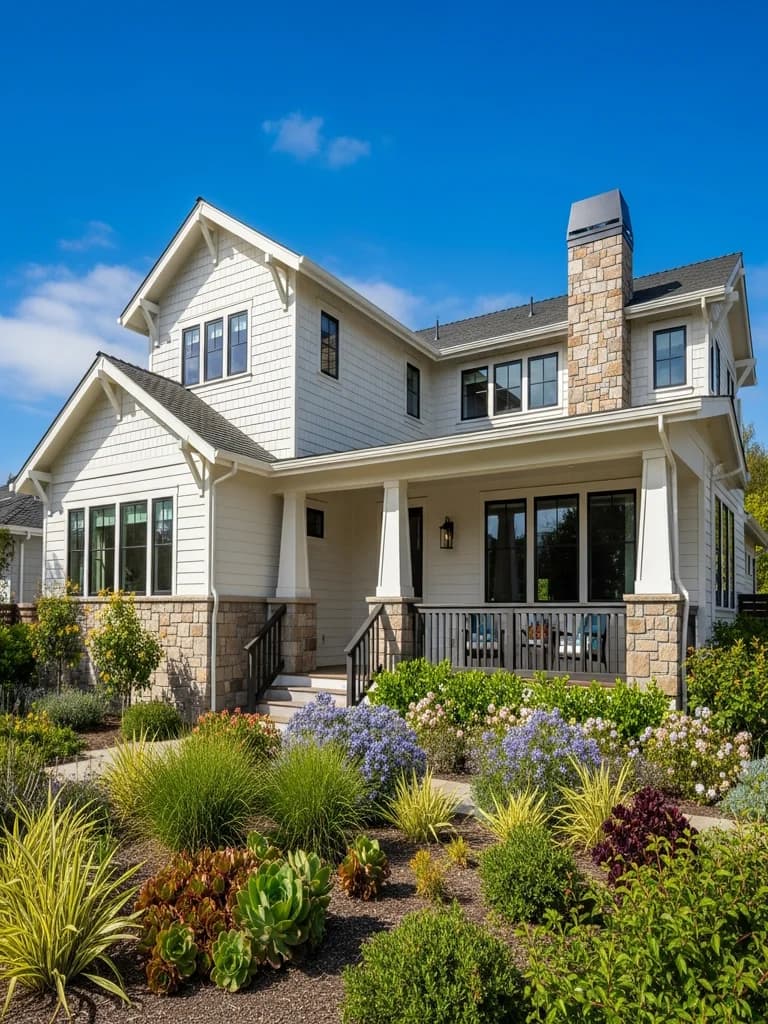
Siding Repair in Cedar Ridge
Cedar Ridge homes sit under a heavy canopy, mostly incense cedar and ponderosa, at around 2,400 feet just southeast of Grass Valley, where Highways 174 and 49 run. A lot of the 1970s through 1990s custom homes here still have cedar, board-and-batten, or T1-11 siding with deep open eaves and big decks. That canopy explains most of the siding damage we're called to fix.
The trees drop a steady stream of needles, hold moisture on shaded walls long after a storm passes, and occasionally drop a limb. A Cedar Ridge repair is about finding which of those caused your damage, fixing it at the source, and then matching the siding. Nearly every parcel has a private well and a septic field, so we map out where trucks and ladders can go before the first visit.
Free estimate
Get your free Cedar Ridge estimate
On-site assessment with a written, itemized scope. We reply within one business day.
Licensed, Bonded & Insured
Needle cast at ledges, battens, and roof-to-wall corners
Needles pile up anywhere there's a flat surface. That includes the top of a horizontal trim board, the gap behind a batten, the corner where a lower roof meets a taller wall, and the joint at a deck. Those piles stay wet, and the wood underneath goes soft. The roof-to-wall corner is the worst spot when the step flashing or kickout flashing is missing, because roof water runs straight into the siding. We remove the damaged material, install proper kickout and step flashing, and replace the siding with a gap above the roofline. Then we point out the ledges you'll want to keep clear.
Board-and-batten and cedar on shaded north walls
On the north side of a heavily wooded lot, a wall can stay damp for weeks during winter. Board-and-batten tends to fail at the bottom of the boards and where the battens trap water against them. Cedar lap tends to fail along the lowest courses and at the end grain at corners. We swap out the damaged boards and battens, choose replacement stock that's as close as we can source, and seal end grain before anything goes up. If the original board is out of production, we'll tell you plainly and talk about replacing the full elevation so the repair blends.
Falling limbs, woodpeckers, and T1-11 punctures
A canopy this close to the house means occasional impact damage from limbs coming down in a storm. Wood siding near the trees also sometimes attracts woodpeckers. A single split or punctured board is a quick fix. On T1-11, a puncture lets water into the plies, so we replace the damaged part of the panel rather than filling it, and we add a Z-flashing at any new horizontal joint. Woodpecker holes get a closer look, since insects in the siding are often what draws the bird. If they're there, the affected boards come out.
Staging around well and septic, and when to re-side
On Cedar Ridge acreage, we keep equipment and material off the leach field and away from the wellhead, and we plan access along the driveway in advance. Cedar Ridge is mapped Very High or falls in State Responsibility Area. With needle-filled eaves and wood siding together under this canopy, it's worth thinking twice about how many times to repair combustible siding. If damage covers several walls, our repair or replace guide walks through the decision. Cedar Ridge is HZ10 for Hardie product, and our Hardie board repair guide covers repairs to fiber cement that's already on the house.
Why this matters in Cedar Ridge
- Specified for Sierra Foothills conditions
- Class A non-combustible fiber cement as the recommended system
- Correctly detailed weather-resistive barrier and flashing
- Installed by a crew with 20 years combined experience
Recommended systems for Cedar Ridge
- Class A non-combustible fiber cement
- James Hardie
- fire-aware detailing
Siding Repair for Cedar Ridge homes
The full siding repair approach — materials, weather-resistive detailing, and the manufacturer standards we install to — is covered on the main service page, then specified for Cedar Ridge's conditions on this one.
Our Cedar Ridge process
- Step 1
Consultation
We listen to your goals and assess your home on site — exposure, substrate, and architecture.
- Step 2
Design & Proposal
A clear written proposal with the right system specified for your climate and a transparent scope.
- Step 3
Expert Installation
Trained crews install to manufacturer best practices with careful weather-management detailing.
- Step 4
Walkthrough & Support
A final walkthrough, full cleanup, and a clear written record of the scope completed — work we stand behind.
FAQ
Siding Repair in Cedar Ridge — FAQ
Most often, a kickout or step flashing is missing, so roof water runs into the siding, and needles collecting in that corner keep it wet. We install the flashing and replace the damaged siding with a gap above the roof.
We match board width and texture as closely as current stock allows. If your board is out of production, we'll bring what's closest and talk about redoing that elevation if nothing blends.
We plan staging so trucks, ladders, and material stay off the leach field and away from the wellhead, and we walk the layout with you before work starts.
Small, isolated holes sometimes can. If the bird is going after insects in the siding, filling the hole leaves the problem behind it, so we open the area first. Our small siding repair cost guide explains the price factors.
Keep Exploring
More for Cedar Ridge homeowners
More in Cedar Ridge
Other exterior services in Cedar Ridge
Nearby Service Areas
Siding Repair near Cedar Ridge
Helpful Exterior Guides