
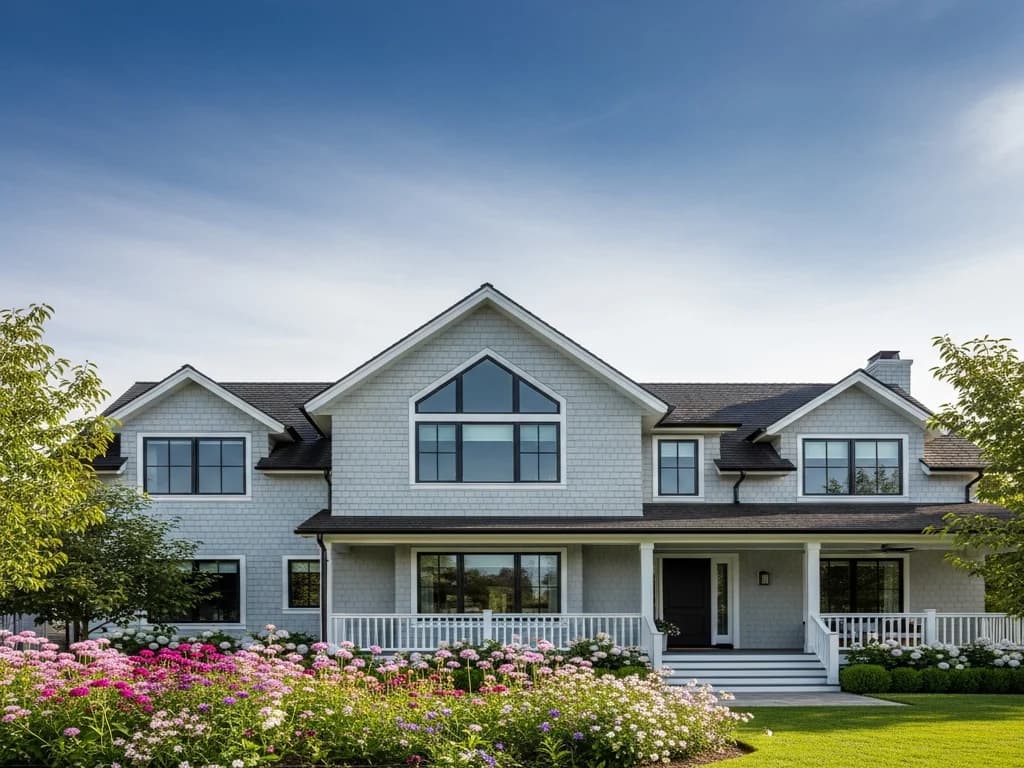
Dry Rot Repair in Loomis
Loomis is acreage, oak woodland, barns, and custom homes, with a small older town core. Heavy canopy, outbuildings, and older wood or T1-11 siding all make dry rot common, and the town's elevated fire exposure means a repair is also a decision about what material goes back on the wall.
We find and fix rot on Loomis homes, and on request we look at the shop or barn wall beside them. The general method is on our [dry rot repair](/dry-rot-repair) page; this is how it plays out on a Loomis property.
Free estimate
Get your free Loomis estimate
On-site assessment with a written, itemized scope. We reply within one business day.
Licensed, Bonded & Insured
Fascia ends under oak-filled gutters
On heavily canopied Loomis lots, gutters fill with oak leaves quickly, and an overflowing gutter dumps water straight onto the fascia and the top of the wall. The low end of each fascia run, where water collects before the downspout, is often the first board to go soft. We probe every run behind the gutter, check the rafter tails and sub-fascia behind it, and replace what has failed with primed stock or non-combustible fiber cement. If the gutter is undersized or pitched wrong, we tell you, since a new fascia under the same overflow will not last.
When the rotted siding is T1-11 that should come off anyway
Many Loomis homes and outbuildings still have wood lap or T1-11 plywood siding. When rot shows up in a few sheets, you have two honest options. One is to replace the damaged panels and fix the water source. The other is to treat the rot as the trigger for re-cladding that elevation in fiber cement, which is non-combustible and doesn't rot, in a town where ember exposure is a real concern. We lay out both, with what each involves, and let you choose. Our signs of dry rot behind siding guide helps you judge how widespread it may be.
Hoses, troughs, and the base of a working property
On equestrian and working acreage, the house often sits near hose bibs, water troughs, wash areas, and irrigated pasture. Water from those sources splashes the bottom courses and the trim at doors and corners day after day. We probe the base of every wall near a water source, look at how the ground slopes toward the house, and keep new siding and trim clear of soil and hardscape when we rebuild. Sometimes moving a hose bib, adding a gravel or concrete splash surface, or regrading a short strip along the wall does as much good as the carpentry.
Town of Loomis permits and the older core
Loomis is legally a town, and if a repair turns into structural work, the permit goes through the Town of Loomis Planning and Building Department. Most trim and siding repairs stay below that. In the older town core the homes are smaller and closer together, and the job is usually matching original trim on a modest house. PG&E Public Safety Power Shutoffs can affect scheduling here, so we plan the work so that an opened wall can be closed the same day. Check your parcel on the OSFM fire hazard map before we scope.
Why this matters in Loomis
- Specified for Foothill / Rural-Residential conditions
- Class A non-combustible fiber cement as the recommended system
- Correctly detailed weather-resistive barrier and flashing
- Installed by a crew with 20 years combined experience
Recommended systems for Loomis
- Class A non-combustible fiber cement
- fire-aware eave and vent detailing
- durable factory finishes
- robust flashing
Dry Rot Repair for Loomis homes
The full dry rot repair approach — materials, weather-resistive detailing, and the manufacturer standards we install to — is covered on the main service page, then specified for Loomis's conditions on this one.
Our Loomis process
- Step 1
Consultation
We listen to your goals and assess your home on site — exposure, substrate, and architecture.
- Step 2
Design & Proposal
A clear written proposal with the right system specified for your climate and a transparent scope.
- Step 3
Expert Installation
Trained crews install to manufacturer best practices with careful weather-management detailing.
- Step 4
Walkthrough & Support
A final walkthrough, full cleanup, and a clear written record of the scope completed — work we stand behind.
FAQ
Dry Rot Repair in Loomis — FAQ
You can, and we will do that if you prefer. In Loomis, though, we usually suggest considering fiber cement for the affected elevation, because it is non-combustible and won't rot again.
We can inspect it while we are on the property and tell you what we see. Our focus is the house, but we will point out outbuilding walls that need attention.
On Loomis acreage, it is often water from hoses, troughs, irrigation, or ground that slopes toward the house. We find the source and keep new material clear of it.
Most siding and trim repairs don't need one. If the work reaches framing, the permit goes through the Town of Loomis, and we tell you before we start.
Keep Exploring
More for Loomis homeowners
More in Loomis
Other exterior services in Loomis
Nearby Service Areas
Dry Rot Repair near Loomis
Helpful Exterior Guides