
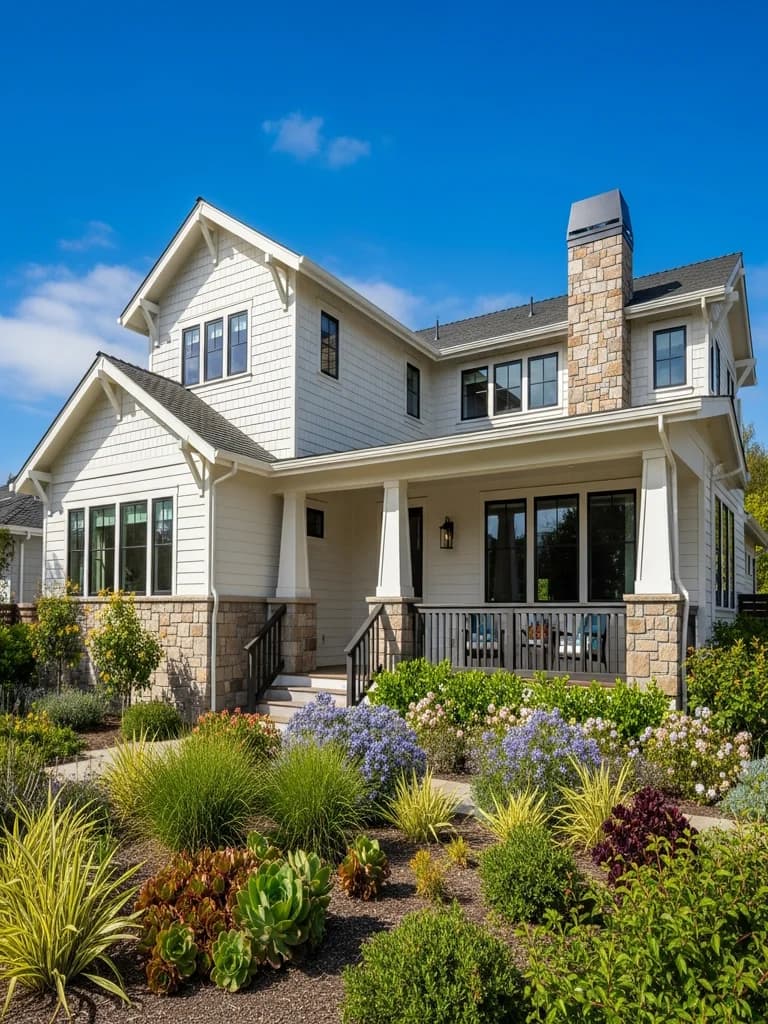
Dry Rot Repair in Chicago Park
Chicago Park's older farmhouses and ranch homes date from its years as an apple-and-pear district along Highway 174, and they have accumulated porches, additions, and repairs over the decades. Rot on these houses tends to be in the structure: porch posts and beams, sill plates on old foundations, and the framing under original window sills. The newer custom homes on wooded parcels have their own weak points, mostly fascia and decks under the pine and oak.
Chicago Park is unincorporated Nevada County, so a permit for structural work goes through the county. Most parcels are on well and septic with long private drives, and we plan access with that in mind. Our [dry rot repair](/dry-rot-repair) page has the full method.
Free estimate
Get your free Chicago Park estimate
On-site assessment with a written, itemized scope. We reply within one business day.
Licensed, Bonded & Insured
Porch posts, beams, and the low porch roof
Farmhouse porches carry their roof on posts and a beam, and both decay at their ends. Post bottoms sit on the porch floor or a pier, catching splash and wicking it into the end grain. At the top, low-slope porch roofs often leak where they meet the house wall, and that water runs into the beam and the ledger holding the roof. We probe each post base and top, check the beam ends, and look up at the porch ceiling for staining. Repairs use temporary shoring, new posts on raised bases, and a replaced beam where needed. We also re-flash the porch roof at the wall so the beam stays dry.
Sill plates on old farmhouse foundations
Older foundations were often lower than current practice, and over decades garden beds and settled soil have brought the ground up against many of these walls. The sill plate and the bottom of the wall framing then sit in damp soil every winter. Where there's a crawlspace, we probe the sill from underneath as well as from outside. Repair involves supporting the wall, removing decayed sill and stud ends in sections, and replacing them with treated lumber. We'll ask you to pull soil back from the wall so the new sill has clearance, because that's the part of the fix that keeps it from happening again.
Under the sills of older windows
Where an older farmhouse still has wood windows, the sill is the first piece to go. Water sits on its flat surface, works into the joint with the jamb, and soaks the framing below. We probe the sill and the wall underneath. A decayed sill end can often be cut out and a new piece spliced in to match the profile, keeping the window in place. If the rot goes into the rough framing below, we open the wall, replace the decayed wood, and add flashing under the sill when it goes back. Our signs of dry rot behind siding guide shows what to watch for.
Picking replacement wood in a Very High setting
Almost all of Chicago Park is mapped Very High or sits in State Responsibility Area. When we replace rotted trim, fascia, or the lowest courses of a wall, non-combustible fiber cement is an option that also won't rot if water comes back. Here that means James Hardie's HZ10 line. On farmhouse porches and window trim where the original wood matters to the look, restoring wood in kind is reasonable, and we'll walk through the trade-off with you, element by element. Our guide to why exterior trim rots helps when weighing it.
Why this matters in Chicago Park
- Specified for Sierra Foothills conditions
- Class A non-combustible fiber cement as the recommended system
- Correctly detailed weather-resistive barrier and flashing
- Installed by a crew with 20 years combined experience
Recommended systems for Chicago Park
- Class A non-combustible fiber cement
- James Hardie
- fire-aware detailing
Dry Rot Repair for Chicago Park homes
The full dry rot repair approach — materials, weather-resistive detailing, and the manufacturer standards we install to — is covered on the main service page, then specified for Chicago Park's conditions on this one.
Our Chicago Park process
- Step 1
Consultation
We listen to your goals and assess your home on site — exposure, substrate, and architecture.
- Step 2
Design & Proposal
A clear written proposal with the right system specified for your climate and a transparent scope.
- Step 3
Expert Installation
Trained crews install to manufacturer best practices with careful weather-management detailing.
- Step 4
Walkthrough & Support
A final walkthrough, full cleanup, and a clear written record of the scope completed — work we stand behind.
FAQ
Dry Rot Repair in Chicago Park — FAQ
Yes. Posts usually decay at the very bottom, where splash and standing water reach the end grain, and at the top beneath a leaking porch roof. A probe at both ends tells us.
Usually. We support the wall locally and replace the sill in sections, so the house doesn't need to be raised.
Often. If the decay is at the sill end, we splice in a matching piece and leave the window in place.
Nevada County's Community Development Agency, since Chicago Park is unincorporated. We check whether your repair needs one before scheduling.
Keep Exploring
More for Chicago Park homeowners
More in Chicago Park
Other exterior services in Chicago Park
Nearby Service Areas
Dry Rot Repair near Chicago Park
Helpful Exterior Guides