Fiber Cement Siding in Stinson Beach
Fiber cement is a material category, and on a Stinson Beach house it is usually being weighed against the cedar shingle and board siding that defines the village. Before choosing a brand or color, it helps to understand what fiber cement actually is, the formats it comes in, what drives the cost on a beach house, and where it beats wood or falls short of it.
Fiber cement is a mix of cement, sand, and cellulose fiber pressed into boards, panels, and shingles. It does not rot or feed a fire, which counts for a lot in a village where salt fog keeps walls damp and the slope behind town is mapped for wildfire. It is also heavier and more exacting to install than wood, and that shapes the work on a sandspit lot.
Free estimate
Get your free Stinson Beach estimate
On-site assessment with a written, itemized scope. We reply within one business day.
Licensed, Bonded & Insured
Fiber cement versus the cedar Stinson grew up with
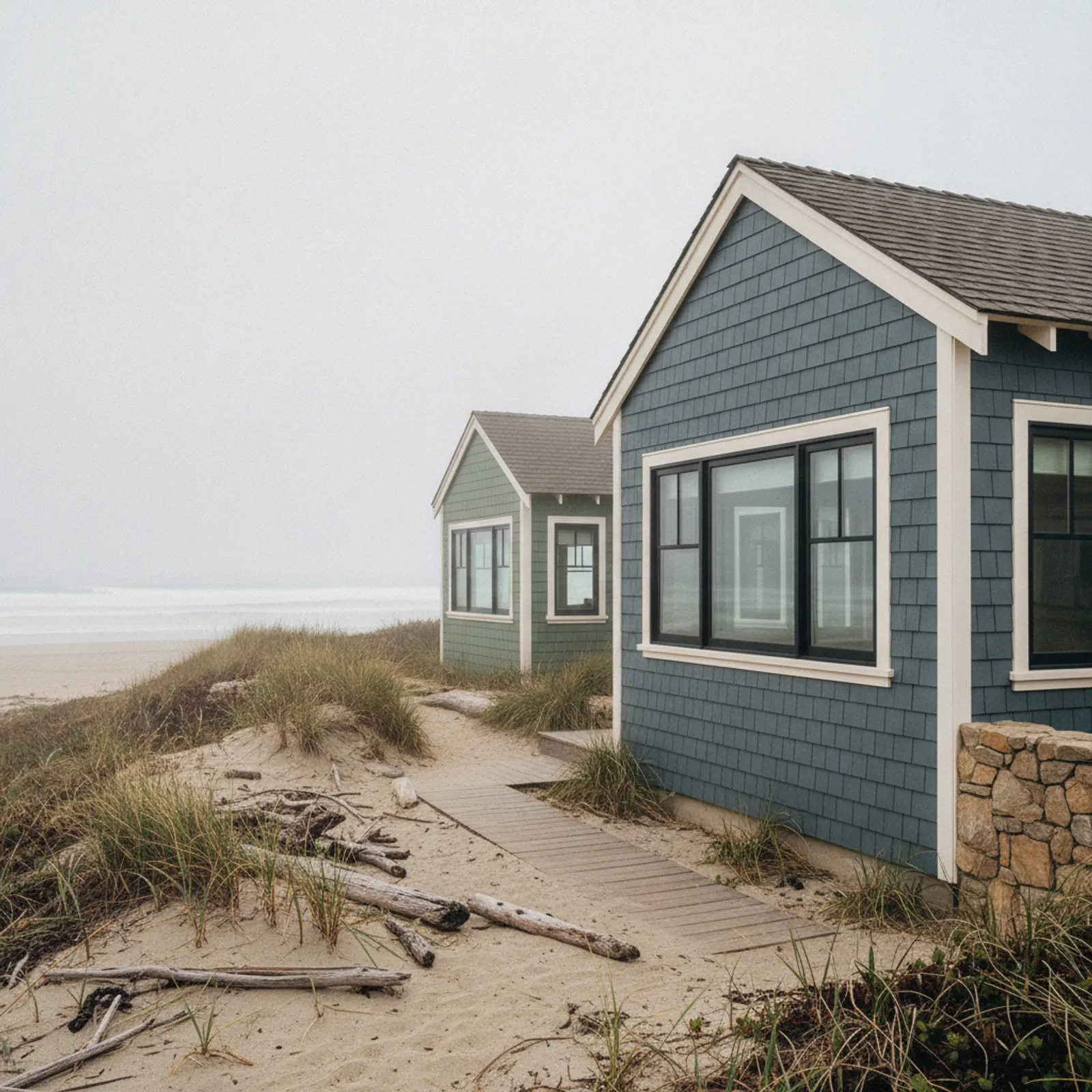
Cedar shingle has real virtues at the beach. It weathers to a silver gray that suits the village, it is easy to patch one piece at a time, and many owners like its look. In open-Pacific exposure it also checks, cups, and grows mildew on the shaded sides, and it needs re-treatment to last. Fiber cement holds its shape and finish in the same damp, but it will never weather like cedar, and it costs more to cut and handle. On the Mt. Tam slope the fire comparison is plain: fiber cement is non-combustible under ASTM E136, while untreated cedar is fuel. Our cedar replacement guide and fiber cement vs. wood fire comparison go further.
Lap, shingle, or panel: matching format to the house
The category comes in three basic formats. Lap planks run horizontally and suit board-sided cottages and most hillside houses. Shingle products, sold as individual pieces or as panels with a shingle pattern, keep the texture of a shingled beach house. Large panels, either vertical with battens or as smooth architectural sheets with expressed joints, fit the cleaner lines of some Seadrift contemporaries. Format affects more than looks: shingle panels and lap planks have many short joints to detail, while big panels have fewer joints but each one has to be flashed and aligned carefully. Our board-and-batten vs. lap comparison walks through the look side.
Brands and board thickness beyond one label
James Hardie is the most widely installed fiber cement in California, but it is not the only one. Nichiha is known for architectural panels with a hidden-clip, integrated-rainscreen install system, and Allura sells a full residential system with roots in CertainTeed's former fiber cement line. Thickness varies by product and brand; standard Hardie lap plank is 5/16 inch, its shingle products are 1/4 inch, and thicker premium boards exist for deeper shadow lines. Thickness changes the look and the trim depth needed at windows, not the fire classification. We install James Hardie as our primary fiber cement for availability and crew familiarity. Our fiber cement brands comparison and thickness chart cover the rest.
What drives a fiber cement bid on a Stinson lot
Square footage is only the start. On a Stinson house the larger cost drivers are how much rot sits behind the old cedar (often more than the face suggests), how many windows and doors need new flashing, the fastener spec (stainless costs more than standard nails, and it is the right call here), the finish route, and access. Sandspit lanes leave little room to stage heavy boards, and hillside homes may need material carried up stairs. A bid should list these items and include a written allowance for hidden damage. Our guide to why siding estimates vary explains how to compare them.
Coastal zone and design review before you order
Stinson Beach is in the Coastal Zone, and permits for the unincorporated village run through the Marin County Community Development Agency. Re-siding an existing single-family home is generally exempt from a Coastal Development Permit under 14 CCR §13250, with listed exceptions such as work on a beach or within 50 feet of a bluff edge. Seadrift homes also go through the Seadrift Association's architectural review. A re-side that grows into replacing half the house after rot is found is treated differently, so we flag that risk early. Our coastal zone permit guide lays out each layer.
Why this matters in Stinson Beach
- Specified for North Bay conditions
- James Hardie as the recommended system
- Correctly detailed weather-resistive barrier and flashing
- Installed by a crew with 20 years combined experience
Recommended systems for Stinson Beach
- James Hardie
- fiber cement
Fiber Cement Siding for Stinson Beach homes
The full fiber cement siding approach — materials, weather-resistive detailing, and the manufacturer standards we install to — is covered on the main service page, then specified for Stinson Beach's conditions on this one.
Our Stinson Beach process
- Step 1
Consultation
We listen to your goals and assess your home on site — exposure, substrate, and architecture.
- Step 2
Design & Proposal
A clear written proposal with the right system specified for your climate and a transparent scope.
- Step 3
Expert Installation
Trained crews install to manufacturer best practices with careful weather-management detailing.
- Step 4
Walkthrough & Support
A final walkthrough, full cleanup, and a clear written record of the scope completed — work we stand behind.
FAQ
Fiber Cement Siding in Stinson Beach — FAQ
It depends on what you value. Fiber cement resists rot and does not burn, which matters in salt fog and on the Mt. Tam slope. Cedar weathers more naturally and patches easily, but it needs more upkeep in open-coast exposure.
Nichiha and Allura are established fiber cement manufacturers, and regional options exist. The core material is similar across reputable brands; installation quality matters more than the label.
Seadrift has its own architectural review, and Marin County cites the association's review in its approvals. Confirm current requirements with the association and get the product, profile, and color approved before ordering.
Hidden rot behind old cedar, window flashing, stainless fasteners, finish choice, and tight access all change the scope. Compare bids line by line, including the hidden-damage allowance.
Keep Exploring
More for Stinson Beach homeowners
More in Stinson Beach
Other exterior services in Stinson Beach
Nearby Service Areas
Fiber Cement Siding near Stinson Beach
Helpful Exterior Guides